


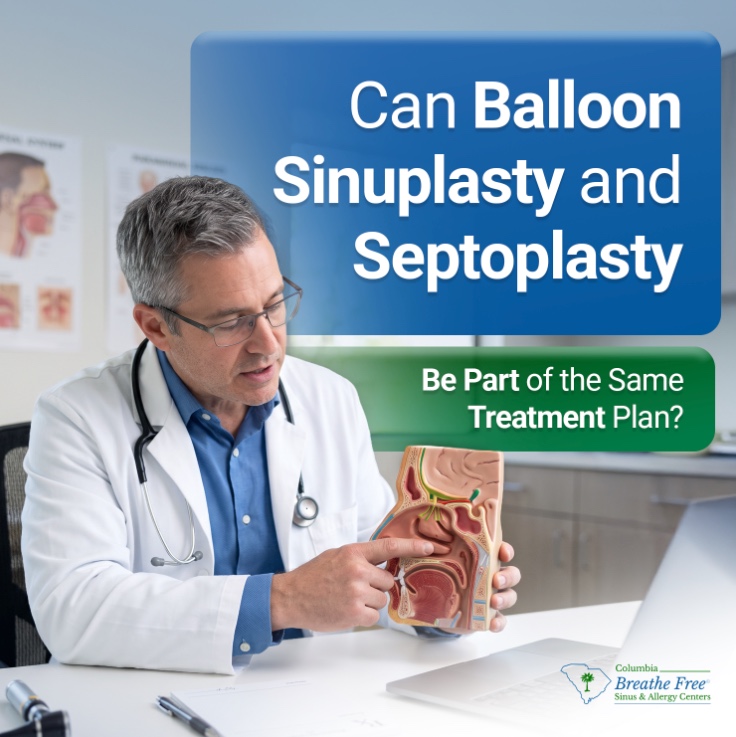
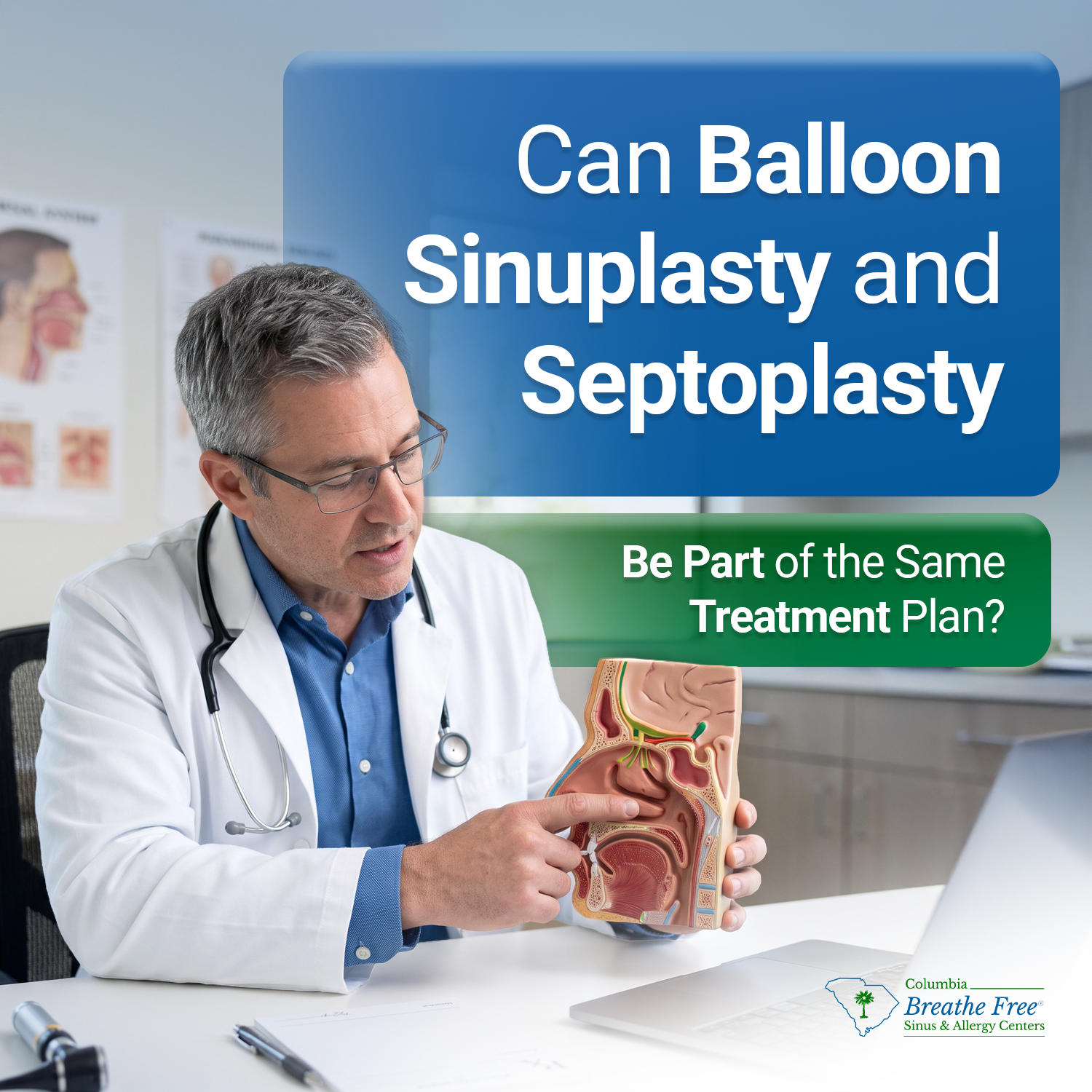
Can Balloon Sinuplasty and Septoplasty Be Part of the Same Treatment Plan?
Persistent sinus and nasal issues such as chronic nasal congestion, breathing difficulties through the nose, postnasal drip, facial and sinus pressure, and nasal discharge can be frustrating, especially when symptoms start affecting your day-to-day routines, activities, productivity, sleep, and comfort.
Many underlying conditions and factors may contribute to these symptoms. Two possible factors are chronic sinusitis and a deviated septum. These conditions are different and may be present at the same time, causing overlapping symptoms.
In such cases, your ENT care provider may discuss and recommend balloon sinuplasty and septoplasty, two treatment options that can address two different anatomical issues. Sometimes, depending on the severity of symptoms, clinical findings, nasal anatomy, and other individual health factors, they may be included in the same treatment plan.
Our team at Columbia Breathe Free can help patients in Lexington, SC, understand their sinus symptoms, how balloon sinuplasty and septoplasty work, and when these two procedures may be combined in the same treatment plan.
What Is Balloon Sinuplasty?
Balloon sinuplasty is a minimally invasive procedure that is designed to gently open and widen blocked sinus passages.
This is a minimally invasive procedure, and unlike traditional sinus surgery, standalone balloon sinuplasty generally does not require cutting or removing nasal or sinus tissue. Instead, the balloon widens selected sinus drainage openings by gently remodeling the surrounding structures.
During the procedure, your ENT care provider inserts a small, flexible balloon catheter into the opening of the affected sinus cavity. Then, the balloon is gently inflated, which can help widen and open the blocked drainage pathway. The balloon is then deflated and removed.
What can balloon sinuplasty treat?
Balloon sinuplasty can help address narrowed or blocked sinus drainage pathways. The procedure may be appropriate and recommended for patients with certain cases of chronic rhinosinusitis or recurrent acute rhinosinusitis.
Associated symptoms with sinus diseases that balloon sinuplasty may help address include:
- Persistent nasal congestion
- Thick nasal discharge
- Postnasal drip, or mucus dripping down the back of the throat
- Facial pressure, pain, or discomfort
- A reduced or decreased sense of smell
- Persistent sinus symptoms despite medical intervention
The goal of balloon sinuplasty is to open and widen blocked sinus openings, but it does not straighten or reposition a misaligned nasal septum. An ENT evaluation can help assess your symptoms and determine whether balloon sinuplasty may be appropriate.
What Is Septoplasty?
Septoplasty is a surgical procedure that is designed to correct or straighten a deviated septum. Not all cases of a deviated septum will need septoplasty. It may be considered and recommended when the deviation significantly contributes to persistent nasal obstruction or difficulty breathing through the nose.
A deviated septum is an anatomical variation in which the nasal septum, the thin wall of bone and cartilage that separates the nose into right and left nostrils, is off-center and misaligned. Ideally, the nasal septum sits relatively near the center. But sometimes, some degree of deviation is present and is common.
Significant nasal septum deviation may cause the narrowing of one or both nasal passages and result in significant sinus issues, such as persistent nasal blockage and difficulty breathing through the nose.
When symptoms do not respond to conservative forms of treatment, septoplasty may be recommended to reposition, reshape, or remove selected portions of the nasal septum.
What can septoplasty treat?
Septoplasty can primarily treat and address nasal obstruction due to a deviated septum.
Associated deviated septum symptoms that septoplasty may address include:
- Persistent nasal obstruction
- Difficulty breathing through one or both nostrils
- Frequent reliance on mouth breathing
- A feeling or sensation that one side of the nose is more blocked than the other
- Breathing difficulties through the nose that become more noticeable during physical activity or sleep
It’s worth noting that a positive finding for a deviated septum does not necessarily mean that it is responsible for every sinus issue and that septoplasty is required. A nasal deviation may coexist with other underlying factors that may be contributing to persistent sinus issues.
And while septoplasty corrects a deviated septum, it does not enlarge or widen narrow or blocked sinus passages.
Can Balloon Sinuplasty and Septoplasty Be Performed Together?
Yes, balloon sinuplasty and septoplasty can sometimes be performed together during the same surgical session when both procedures are determined to be medically appropriate.
An individual may have both narrowed or blocked sinus drainage pathways and a deviated septum, and both may be contributing to persistent sinus symptoms. The decision depends on symptom severity, diagnostic findings, response to previous treatments, and individual health factors.
However, it’s important to know that having both conditions does not necessarily mean that both balloon sinuplasty and septoplasty are required in the patient’s treatment plan.
Your ENT care provider will evaluate your symptoms and their severity, clinical findings, underlying conditions and contributing factors, response to previous treatments, and treatment goals.
When Might an ENT Recommend Both Procedures in the Same Treatment Plan?
Your ENT specialist may recommend both balloon sinuplasty and septoplasty in the same treatment plan for several possible reasons, such as:
✅The patient has two anatomical problems: a deviated septum and narrowed sinus drainage pathways that exist simultaneously and are both contributing to symptoms.
✅The patient is experiencing persistent symptoms despite appropriate medical management and treatment.
✅A deviated septum is making it difficult for an ENT specialist to access certain areas of the nasal cavity.
✅Both balloon sinuplasty and septoplasty may be clinically appropriate within one coordinated surgical session, meaning the patient can go through anesthesia, an operative experience, and a recovery period once, instead of separately.
Recovery expectations, potential risks,m and anesthesia requirements vary depending on the patient’s condition and individual treatment plan.
Does everyone with chronic sinusitis and a deviated septum need both procedures?
No, not everyone who has both chronic sinusitis and a deviated septum will need both procedures medically.
An ENT specialist may recommend one or both procedures depending on the overall severity of the condition and the underlying cause.
During your consultation, your ENT care provider may review your symptoms and medical history, perform a nasal examination, review sinus CT imaging when appropriate, and evaluate other contributing conditions (such as allergies, nasal polyps, enlarged turbinates, and other conditions that may contribute to symptoms).
Conclusion: Understanding Balloon Sinuplasty and Septoplasty With Columbia Breathe Free
Columbia Breathe Free offers ear, nose, and throat care services for patients in Lexington, West Columbia, Gilbert, Summit, and nearby communities. Schedule a consultation with our team to learn more about balloon sinuplasty and septoplasty, and when you might need one or both procedures.
Other Blogs
Popping, Muffled Hearing, and Ear Fullness: Could the Eustachian Tube Be Involved?
Ears that pop, feel full, or sound muffled could point to Eustachian tube dysfunction. Learn the common triggers, how it differs from an ear infection, and when to see an ENT.
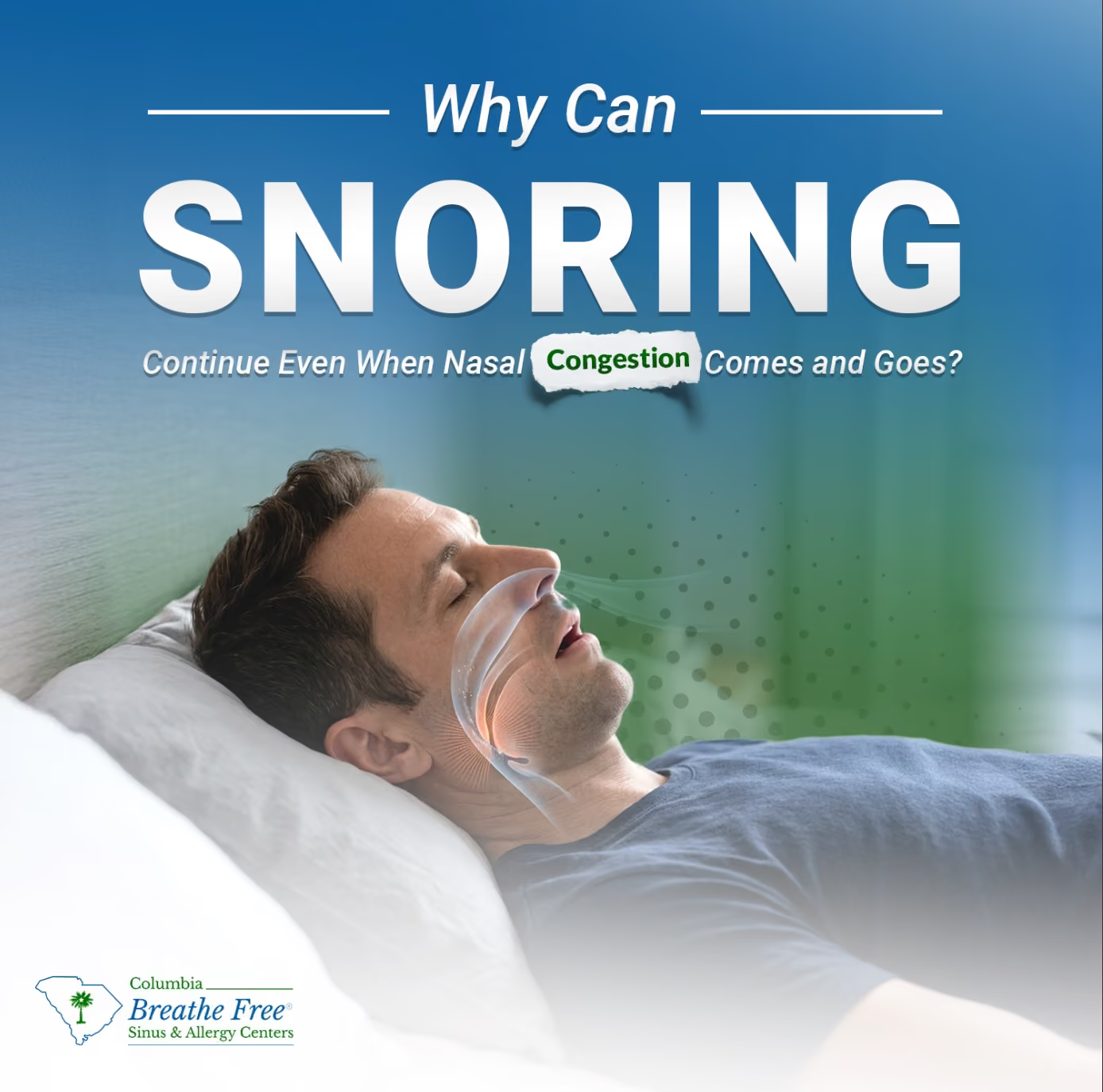
Why Can Snoring Continue Even When Nasal Congestion Comes and Goes?
Snoring can continue even when nasal congestion comes and goes because the cause may involve more than the nasal passages. Relaxed throat tissues, tongue position, a deviated septum, allergies, sleeping position, and obstructive sleep apnea can all contribute to persistent snoring. Learn why congestion may worsen snoring, which symptoms may indicate a sleep-related breathing disorder, how an ENT evaluates possible causes, and what treatment options may help at Columbia Breathe Free Sinus & Allergy Centers in South Carolina.

Nasal Polyps vs. Swollen Nasal Tissue: Why Can They Feel Similar?
Both soft nasal polyps and enlarged turbinates can block airflow, reduce your sense of smell, and affect sinus drainage; an evaluation at Columbia Breathe Free in Lexington, SC, can help determine what may be contributing to your symptoms and guide appropriate treatment options.
The information provided in this article is for informational and educational purposes only and does not constitute medical advice. It is not intended to diagnose, treat, cure, or prevent any disease or medical condition. Always seek the guidance of your physician or other qualified healthcare provider with any questions you may have regarding a medical condition or treatment.
Results may vary: Treatment outcomes and health experiences may differ based on individual medical history, condition severity, and response to care.
Emergency Notice: If you are experiencing a medical emergency, call 911 or seek immediate medical attention.