


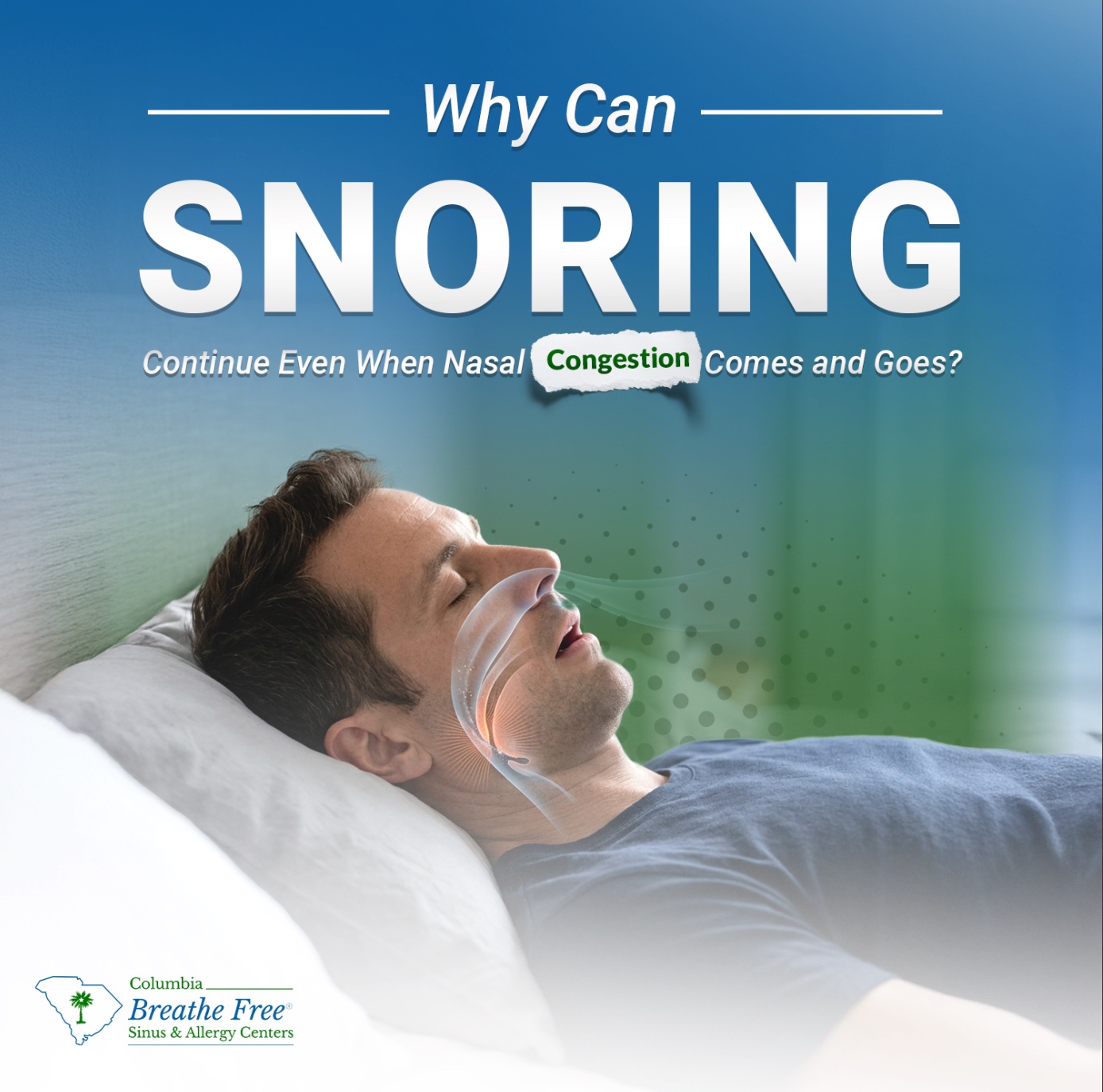
Why Can Snoring Continue Even When Nasal Congestion Comes and Goes?
You may notice that your nose is not congested every night, yet the snoring continues. Some nights you breathe fairly well through your nose, while on others you are stuffed up from allergies or a cold. If the congestion comes and goes but the snoring does not, it may mean that nasal blockage is only part of the problem.
Snoring happens when air moves through a narrowed or partially blocked upper airway during sleep. Nasal congestion can make that narrowing worse, but the tissues in the throat, the position of your jaw and tongue, and the way your airway behaves while you sleep can also contribute. Columbia Breathe Free Sinus & Allergy Centers evaluates patients with chronic nasal and breathing problems to help determine what may be behind persistent snoring.
Why Does Snoring Happen?
When you are awake, the muscles and tissues around your airway help keep the passage open. During sleep, those muscles naturally relax.
If the airway becomes narrow enough, air has less room to move through. The airflow can cause nearby soft tissues to vibrate, producing the sound we recognize as snoring.
Nasal congestion can increase resistance to airflow and encourage mouth breathing, but the vibration responsible for snoring may occur farther back in the throat. That is why clearing your nose does not always make the snoring disappear.
Can You Snore Even When You Can Breathe Through Your Nose?
Yes. Being able to breathe comfortably through your nose does not necessarily mean the rest of your upper airway remains wide open during sleep.
Your tongue, soft palate, tonsils, and other tissues around the throat can all affect the space available for airflow. When these tissues relax during sleep, the airway may become narrower even though your nasal passages feel relatively clear.
This is one reason someone can have persistent snoring without having constant nasal congestion.
How Can Occasional Congestion Make Snoring Worse?
Congestion may not be the original cause of your snoring, but it can add another layer of obstruction.
During an allergy flare-up, cold, or sinus problem, the tissues inside your nose can swell. Breathing through the nose becomes more difficult, so you may start breathing through your mouth while sleeping.
Mouth breathing can change the way air moves through the throat and may make existing snoring more noticeable.
Once the congestion improves, the snoring may become quieter, but it may not disappear if another part of the airway is still contributing.
Could Allergies Be Part of the Problem?
Yes. Allergies can cause nasal inflammation that makes nighttime breathing more difficult.
If you have seasonal or year-round allergies, you may notice that snoring becomes worse during certain times of the year or after exposure to particular triggers. Pollen, dust, mold, pet dander, and other allergens can cause swelling inside the nose and increase congestion.
In South Carolina, seasonal pollen can be a significant source of nasal symptoms. Managing the underlying allergy may improve nasal airflow, but persistent snoring may still need to be evaluated separately.
Does Sleeping Position Affect Snoring?
It can. Snoring is often more noticeable when a person sleeps on their back.
In this position, the tongue and soft tissues of the throat can shift backward as the muscles relax. This can reduce the space available for airflow and increase tissue vibration.
Some people notice that their snoring improves when they sleep on their side. If snoring continues regardless of position, however, there may be other factors affecting the airway.
Could a Deviated Septum Be Contributing?
A deviated septum can make nasal breathing more difficult, even if the obstruction is not constant.
The septum separates the two nasal passages. If it is significantly off-center, one side may have less room for airflow. You may notice the difference more when you are lying down or when allergies cause additional swelling.
A deviated septum does not automatically cause snoring, but it can contribute to nighttime mouth breathing and may make existing snoring worse.
When Is Snoring a Sign of Sleep Apnea?
Persistent snoring does not necessarily mean you have obstructive sleep apnea, but it can be one of the symptoms.
Obstructive sleep apnea (OSA) occurs when the upper airway repeatedly narrows or becomes blocked during sleep, causing breathing to decrease or temporarily stop. Because these episodes happen while you are asleep, you may not realize they are occurring.
Other signs that deserve attention include:
- Pauses in breathing noticed by a bed partner.
- Gasping or choking during sleep.
- Waking with headaches or a dry mouth.
- Significant daytime sleepiness.
- Difficulty concentrating during the day.
- Waking frequently throughout the night.
If these symptoms occur along with loud or persistent snoring, an evaluation can help determine whether sleep apnea or another sleep-related breathing problem may be involved.
Why Does Snoring Continue After a Cold?
A cold can temporarily make snoring worse because nasal congestion increases resistance to airflow and may encourage mouth breathing during sleep. But if the snoring continues after the cold is gone, the infection may not have been the underlying cause.
The illness may simply have made an existing airway problem more noticeable. Once the congestion clears, you may breathe more easily through your nose while still snoring because the narrowing farther down the airway remains.
This distinction can be useful when deciding whether recurring snoring needs an evaluation.
How Can an ENT Determine What Is Causing Snoring?
An ENT evaluation looks at more than just whether your nose is congested on the day of the appointment.
Your provider may ask about your sleeping position, snoring pattern, nasal breathing, allergies, nighttime symptoms, and whether someone has noticed pauses in your breathing. The examination can also look for structural issues involving the nose, throat, and upper airway.
If sleep apnea is suspected, a sleep study may be recommended to monitor breathing and other changes while you sleep.
The goal is to determine whether the main issue is nasal obstruction, throat anatomy, sleep apnea, allergies, or a combination of factors.
What Can Help Persistent Snoring?
Treatment depends on what is narrowing the airway.
If allergies or chronic nasal inflammation are contributing, controlling the inflammation may make nighttime breathing easier. A deviated septum or other structural nasal problem may require a different approach when it significantly interferes with airflow.
For patients with sleep apnea, treatment is based on the severity and underlying cause. Options can include positive airway pressure therapy, oral appliances, lifestyle changes, or procedures in appropriate cases.
Treating congestion alone may not stop snoring when the problem involves other parts of the upper airway.
When Should You Have Persistent Snoring Evaluated?
Occasional snoring during a cold is usually less concerning than snoring that happens most nights.
Consider scheduling an evaluation if you:
- Snore regularly even when you are not congested.
- Wake up with a dry mouth or sore throat.
- Feel tired despite getting enough hours of sleep
- Frequently wake during the night.
- Have persistent nasal obstruction.
- Gasp, choke, or stop breathing during sleep.
- Have a partner who notices significant breathing changes at night.
Persistent snoring is worth discussing when it affects your sleep or raises concerns about how well you are breathing overnight.
Snoring Can Have More Than One Cause
Nasal congestion can certainly make snoring worse, but it does not have to be present every night for snoring to continue. Airway anatomy, mouth breathing, allergies, sleeping position, and sleep-related breathing disorders can all play a role. When snoring persists even after your nose clears, looking beyond congestion can help identify what is actually happening during sleep.
Schedule an appointment with Columbia Breathe Free Sinus & Allergy Centers to find out whether nasal obstruction, allergies, or another airway problem may be contributing to your persistent snoring.
Other Blogs

Nasal Polyps vs. Swollen Nasal Tissue: Why Can They Feel Similar?
Both soft nasal polyps and enlarged turbinates can block airflow, reduce your sense of smell, and affect sinus drainage; an evaluation at Columbia Breathe Free in Lexington, SC, can help determine what may be contributing to your symptoms and guide appropriate treatment options.
Can a Deviated Septum Make One Nostril Feel More Blocked Than the Other?
Wondering why one nostril always feels more blocked? Learn how a deviated septum affects airflow, what else may cause one-sided congestion, and when to see an ENT in Columbia.
Understanding Chronic Sinusitis: Symptoms, Causes, and Treatment Options
Chronic sinusitis can cause persistent nasal congestion, sinus pressure, postnasal drip, headaches, and other symptoms that may interfere with daily life. This guide explains what chronic sinusitis is, common causes and symptoms, how Lexington’s environment may affect sinus health, and available treatment options, including medications, allergy drops, balloon sinuplasty, septoplasty, and endoscopic sinus surgery. Learn when persistent or recurring symptoms may warrant an evaluation with a sinus specialist at Columbia Breathe Free.
The information provided in this article is for informational and educational purposes only and does not constitute medical advice. It is not intended to diagnose, treat, cure, or prevent any disease or medical condition. Always seek the guidance of your physician or other qualified healthcare provider with any questions you may have regarding a medical condition or treatment.
Results may vary: Treatment outcomes and health experiences may differ based on individual medical history, condition severity, and response to care.
Emergency Notice: If you are experiencing a medical emergency, call 911 or seek immediate medical attention.