


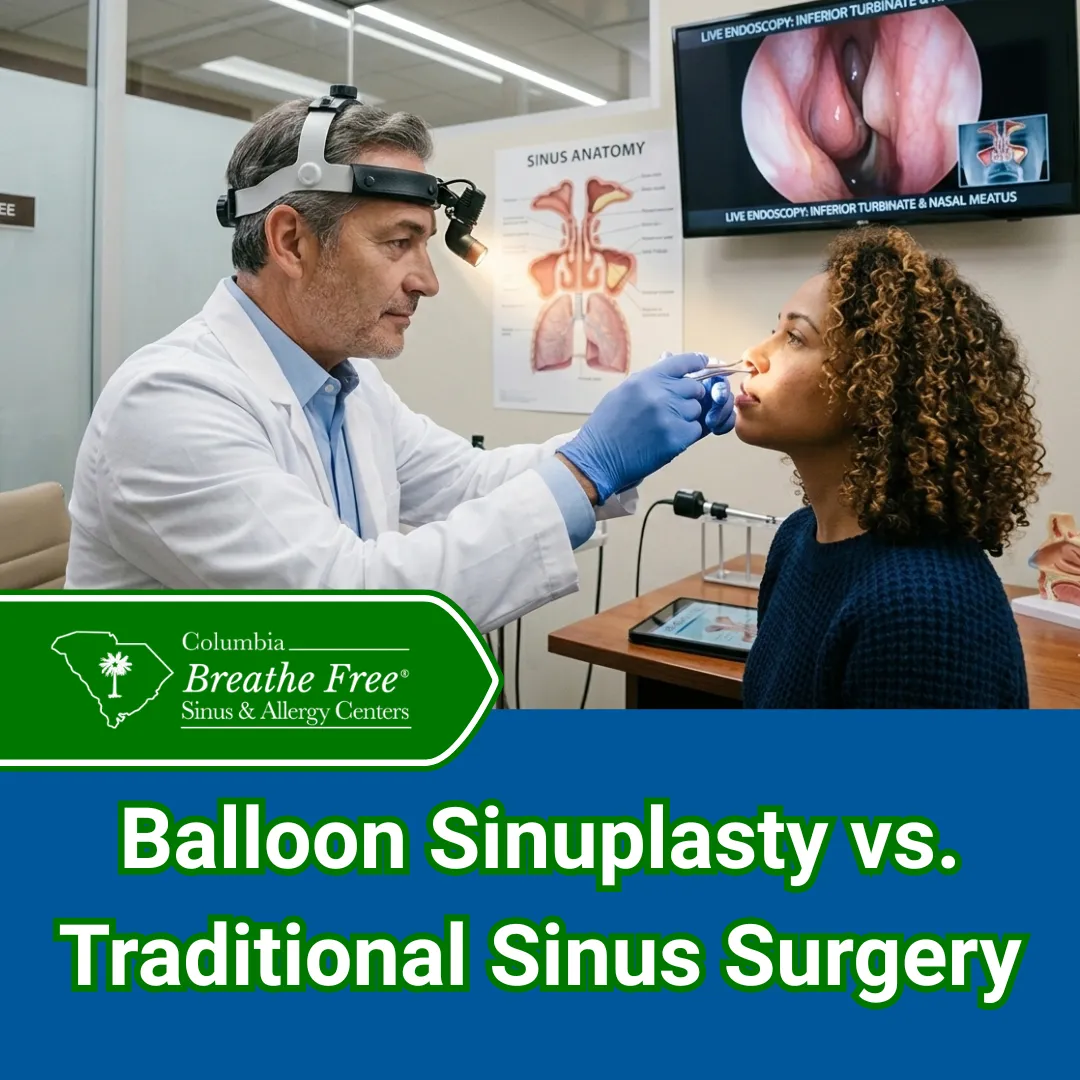
Balloon Sinuplasty vs. Traditional Sinus Surgery
If you live in the Columbia area and struggle with ongoing sinus pressure, congestion, or repeat infections, you may have heard about different procedural options. Two of the most common are balloon sinuplasty and traditional sinus surgery. While both approaches are intended to address sinus blockages and may help improve drainage and breathing in appropriately selected patients, they are not the same.
At Columbia Breathe Free Sinus & Allergy Centers, patients often ask which option is “better.” The honest answer is that the right choice depends on your diagnosis, anatomy, symptom severity, and prior treatments. Understanding the differences can help you feel more prepared for a detailed conversation with an ENT specialist.
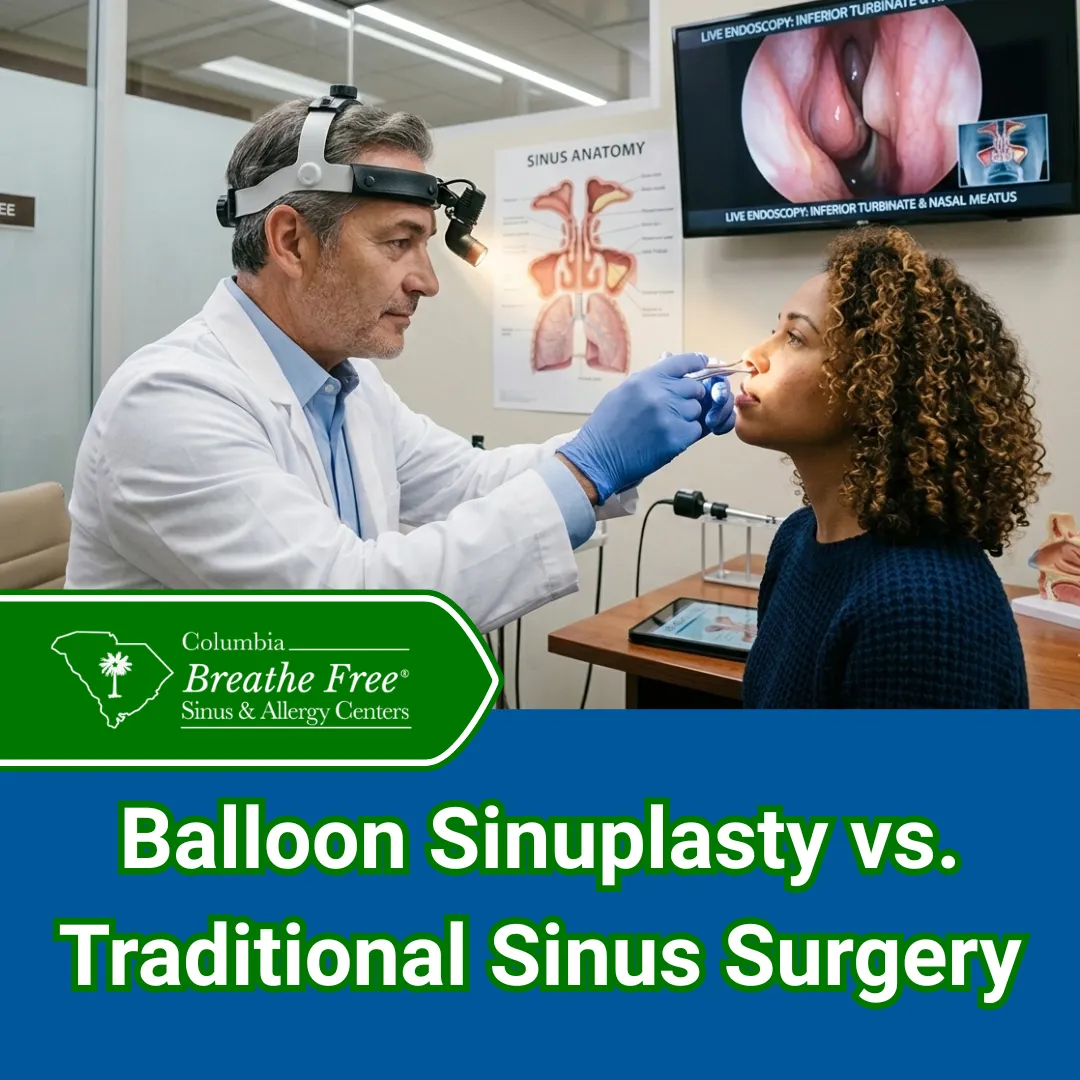
Understanding Chronic Sinus Problems
Your sinuses are air-filled spaces inside the bones of your face. When they are healthy, mucus drains normally through small openings. But when those openings become blocked due to inflammation, swelling, polyps, or structural issues, pressure and infection can develop.
Most sinus symptoms are first treated with medical therapy. This may include nasal sprays, saline rinses, allergy management, or prescription medications. If symptoms continue despite appropriate medical care, your ENT may discuss procedural options.
Not every patient is a candidate for a procedure. A full evaluation, which may include nasal endoscopy or imaging, helps determine whether balloon sinuplasty or traditional sinus surgery is appropriate.
What Is Balloon Sinuplasty?
Balloon sinuplasty is a minimally invasive procedure designed to widen blocked sinus openings. Instead of removing tissue, a small, flexible balloon catheter is guided into the sinus passage. The balloon is then gently inflated to expand the opening and support drainage.
Because it does not involve cutting or removing bone or tissue in most cases, balloon sinuplasty is often described as less invasive than traditional surgery. However, candidacy depends on the specific sinus problem being treated.
Potential Features of Balloon Sinuplasty
Depending on the patient’s condition and anatomy, balloon sinuplasty may:
- Be performed in an office or outpatient setting
- Involve less tissue disruption compared to certain surgical techniques
- Focus on specific blocked sinus pathways
Recovery time varies. Some patients resume light activities within a few days, depending on individual factors. Others may need additional time. Your ENT will provide guidance based on your specific case.
Balloon sinuplasty is generally considered for patients with mild to moderate sinus blockage without extensive polyps or severe structural problems. It may not be appropriate for more complex sinus disease.
What Is Traditional Sinus Surgery?
Traditional sinus surgery is often called functional endoscopic sinus surgery (FESS). In this type of surgery, they use specialized instruments and small cameras to remove tissue, bone, or polyps that block sinus drainage pathways.
This procedure is typically performed in an operating room setting. The surgeon works through the nostrils, so there are usually no external cuts. The goal is to open the sinus passages and restore more normal airflow and drainage.
Potential Features of Traditional Sinus Surgery
Depending on the individual situation, traditional sinus surgery may:
- Address more extensive sinus disease
- Remove nasal polyps or thickened tissue
- Correct structural problems contributing to blockage
Because this approach may involve tissue removal, recovery experiences can differ from patient to patient. Some individuals may experience temporary congestion, nasal drainage, or mild discomfort after surgery. Follow-up visits are often part of the healing process to monitor recovery and clear any crusting.
Traditional sinus surgery has been used for many years in ENT practice for complex sinus conditions. It is often considered when medical therapy and less invasive options are not sufficient.
General Differences to Consider
How Doctors Decide Which Procedure Is Appropriate
Choosing between balloon sinuplasty and traditional sinus surgery involves several factors:
Severity of Sinus Disease
Mild or moderate blockage without extensive tissue growth may be addressed with balloon dilation. More complex disease, including large polyps or significant anatomical obstruction, may require surgical removal.
Imaging Results
CT scans provide detailed images of the sinus cavities. These images help your ENT see how many sinuses are involved and whether structural changes are present.
Prior Treatments
If medications and allergy management have not improved symptoms, procedural options may be discussed. If a patient has already had prior sinus surgery, that may also influence the recommendation.
Overall Health
Your general health, medical history, and tolerance for anesthesia are also considered when planning treatment.
No procedure guarantees complete symptom resolution. Outcomes vary based on anatomy, healing response, and underlying conditions such as allergies or asthma.
Risks and Considerations
All procedures carry potential risks. These may include bleeding, infection, swelling, or temporary changes in nasal sensation. Serious complications are uncommon but possible, especially with more extensive surgery.
Balloon sinuplasty may involve less tissue disruption in appropriately selected patients. Traditional sinus surgery may allow broader access to multiple sinus areas when disease is more advanced.
Your ENT specialist will review potential benefits, risks, and alternatives before any procedure is scheduled. This discussion is an important part of informed decision-making.
Recovery and Follow-Up
Recovery experiences vary. Some patients report mild pressure or congestion for a short period after balloon sinuplasty. Others may notice temporary swelling or drainage after traditional sinus surgery.
Follow-up care is important for both procedures. Your doctor may recommend saline rinses, medications, or in-office visits to monitor healing. Adhering to post-procedure instructions plays a key role in the recovery process.
Because every patient heals differently, it is not possible to predict exact recovery timelines or symptom changes.
Which Option Is Right for You?
If chronic sinus symptoms are affecting your daily life, a consultation with an ENT specialist can help clarify whether balloon sinuplasty, traditional sinus surgery, or continued medical therapy is appropriate for your condition.
At Columbia Breathe Free Sinus & Allergy Centers, evaluations are based on clinical findings, examination, and imaging when indicated. Not every patient is a candidate for every procedure, and outcomes vary depending on diagnosis, anatomy, and overall health.
Are you ready for someone to review your symptoms and explore available evaluation and treatment options? Schedule a consultation with us!
Other Blogs
Understanding Chronic Sinusitis: Symptoms, Causes, and Treatment Options
Chronic sinusitis can cause persistent nasal congestion, sinus pressure, postnasal drip, headaches, and other symptoms that may interfere with daily life. This guide explains what chronic sinusitis is, common causes and symptoms, how Lexington’s environment may affect sinus health, and available treatment options, including medications, allergy drops, balloon sinuplasty, septoplasty, and endoscopic sinus surgery. Learn when persistent or recurring symptoms may warrant an evaluation with a sinus specialist at Columbia Breathe Free.

Allergy Season in Columbia: What ENT Specialists Want You to Know
Columbia ranks among the nation's top allergy capitals. ENT specialists at Columbia Breathe Free break down seasonal triggers, symptoms, and treatment options to help you find relief.
%20(1).png)
How Modern ENT Clinics Use Technology to Improve Sinus Treatment
Common sinus issues such as nasal congestion, postnasal drip, and sinus pressure can be frustrating; therefore, understanding how modern ENT technologies are used at Columbia Breathe Free can help patients in Lexington, SC, find effective, minimally invasive sinus treatment and long-term relief.
The information provided in this article is for informational and educational purposes only and does not constitute medical advice. It is not intended to diagnose, treat, cure, or prevent any disease or medical condition. Always seek the guidance of your physician or other qualified healthcare provider with any questions you may have regarding a medical condition or treatment.
Results may vary: Treatment outcomes and health experiences may differ based on individual medical history, condition severity, and response to care.
Emergency Notice: If you are experiencing a medical emergency, call 911 or seek immediate medical attention.