


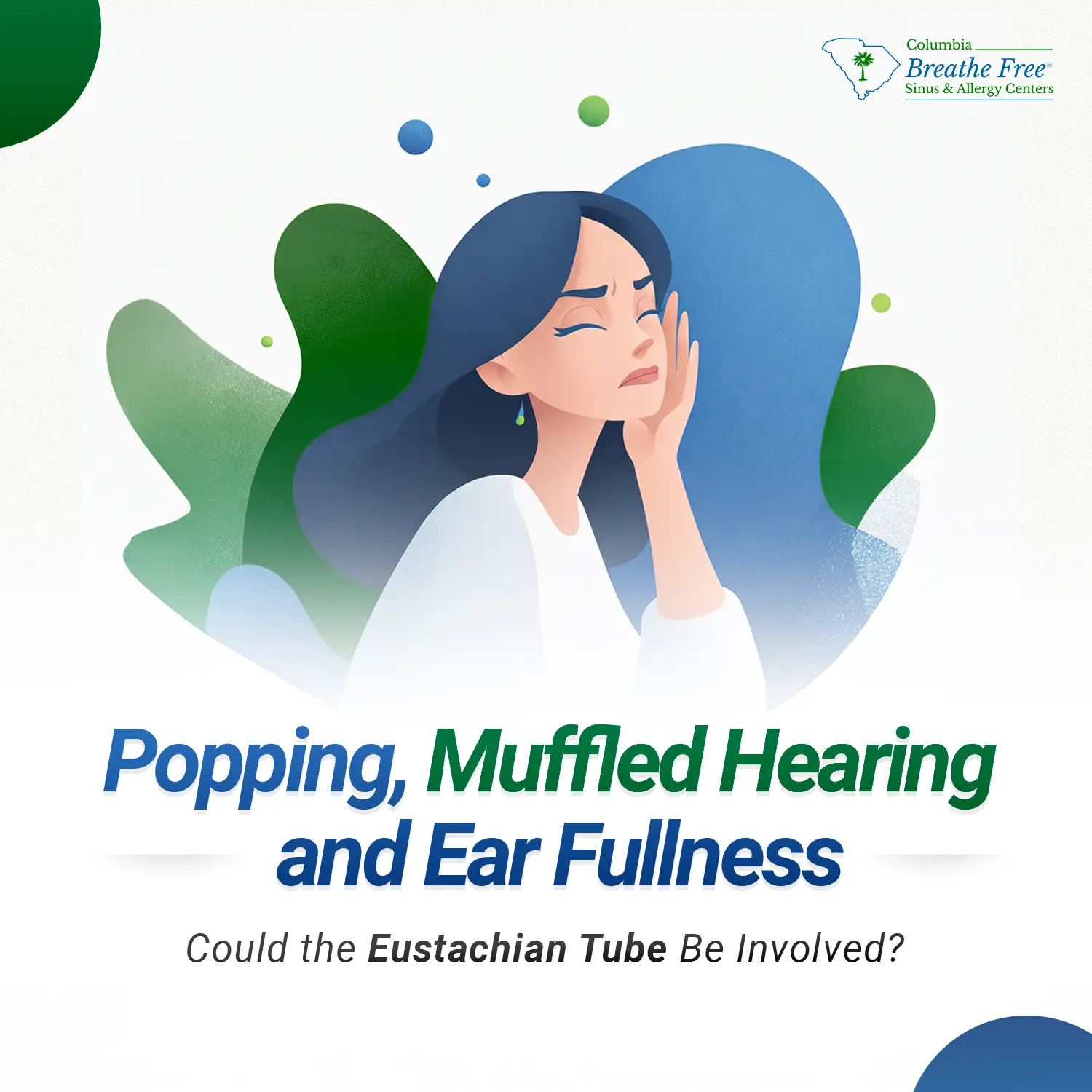
Popping, Muffled Hearing, and Ear Fullness: Could the Eustachian Tube Be Involved?
Your ears may pop when you swallow, feel plugged during a flight, or sound as though everything is coming through a layer of cotton. Sometimes these sensations appear together, making it difficult to tell whether you have an ear infection, congestion, or another problem.
One possible explanation is Eustachian tube dysfunction (ETD). The Eustachian tubes connect the middle ears to the back of the nose and throat, helping regulate pressure and drain fluid. When they do not function properly, pressure changes can leave your ears feeling full, cause frequent popping, or make sounds seem muffled.
At Columbia Breathe Free Sinus & Allergy Centers, an ENT evaluation can help determine whether Eustachian tube dysfunction is contributing to your symptoms and whether another ear, nose, or throat condition may be involved.
Why Does Your Ear Keep Popping?
The Eustachian tubes normally open briefly when you swallow, yawn, or chew. This allows air to move into the middle ear and helps equalize pressure on both sides of the eardrum.
You may notice your ears popping during a flight, while driving through changes in elevation, or when recovering from a respiratory infection. These sensations are not necessarily a problem. In fact, occasional popping is part of normal pressure regulation.
The concern arises when the tubes have difficulty opening or closing properly. Pressure may not equalize as it should, causing repeated popping, clicking, or a sensation that your ears need to clear but never quite do.
What Makes Hearing Sound Muffled?
When pressure inside the middle ear becomes unbalanced, the eardrum may not vibrate as freely as it normally would. Fluid can also accumulate behind the eardrum in some cases, further interfering with sound transmission.
This can produce a temporary conductive hearing change. Sounds may seem quieter or less distinct, and conversations may become harder to follow, particularly in noisy environments.
Muffled hearing associated with Eustachian tube dysfunction may improve as pressure normalizes or fluid clears. However, not every hearing change comes from ETD. Earwax, middle-ear infections, inner-ear conditions, and other problems can cause similar symptoms.
A sudden or significant loss of hearing should not be assumed to be congestion and needs urgent medical assessment.
Why Does Your Ear Feel Full Even When Nothing Is Inside It?
Ear fullness often feels like pressure, blockage, or the sensation of having water trapped inside the ear. Despite how it feels, the sensation does not necessarily mean that something is physically lodged in the ear canal.
When the Eustachian tube cannot regulate middle-ear pressure effectively, the resulting pressure difference can create that plugged sensation. If fluid develops behind the eardrum, fullness may become more noticeable.
Some people experience fullness in both ears, while others notice it primarily on one side. The sensation may come and go, particularly when symptoms are related to a respiratory infection or changes in air pressure.
Persistent one-sided fullness deserves an evaluation, especially if it occurs with hearing changes or other unexplained symptoms.
What Can Trigger Eustachian Tube Dysfunction?
Several conditions can interfere with normal Eustachian tube function. Common triggers include:
- Colds and respiratory infections: Inflammation around the opening of the tube can make pressure equalization more difficult.
- Allergies: Nasal inflammation may contribute to swelling near the Eustachian tube opening.
- Sinus inflammation: Ongoing nasal and sinus symptoms can occur alongside ETD and may contribute to ear pressure.
- Air pressure changes: Flying or traveling through areas with changing elevation can make pressure differences more noticeable.
Fluid may also accumulate behind the eardrum when the Eustachian tube does not ventilate the middle ear effectively, contributing to fullness and muffled hearing.
Not everyone with allergies or sinus congestion develops Eustachian tube dysfunction. The relationship depends on the underlying cause and how the condition affects the tube.
Is Eustachian Tube Dysfunction the Same as an Ear Infection?
No. Although the symptoms can overlap, the conditions are different.
Eustachian tube dysfunction involves problems with pressure regulation or the normal function of the tube connecting the middle ear to the back of the nose. An ear infection involves infection and inflammation in part of the ear, often the middle ear.
Both may cause ear discomfort, fullness, and hearing changes. An infection may also cause more pronounced pain, fever, or drainage, although symptoms vary.
Because these conditions can feel similar, an examination is often needed to distinguish between them. Taking antibiotics will not treat ETD unless a bacterial infection is also present.
How Does an ENT Determine Whether the Eustachian Tube Is Involved?
The evaluation begins with your symptoms and medical history. Your ENT may ask when the popping or fullness started, whether it follows a cold or allergy flare, and whether the symptoms affect one or both ears.
An examination of the ear can help identify eardrum changes, fluid, or signs of infection. Depending on the findings, testing may include:
- Tympanometry: Measures how the eardrum and middle ear respond to changes in air pressure.
- Hearing testing: Assesses whether hearing has changed and helps distinguish conductive hearing loss from other patterns.
- Nasal examination: Checks for inflammation or other problems near the opening of the Eustachian tube.
Not everyone needs every test. The appropriate evaluation depends on the symptoms, examination findings, and how long the problem has been present.
What Can Help Relieve Ear Fullness and Popping?
Treatment depends on what is causing the Eustachian tube problem. When symptoms develop during a cold or temporary allergy flare, they may improve as the inflammation settles.
Swallowing, yawning, or chewing gum may help equalize pressure during air travel. If allergies are contributing, treating the allergy may help reduce nasal inflammation. However, persistent symptoms may require further assessment rather than repeated attempts to clear the ears.
An ENT can discuss appropriate treatment based on the cause and severity of your symptoms. For some people with chronic, bothersome Eustachian tube dysfunction, additional procedures may be considered after an evaluation.
If you are looking for an ENT specialist, understanding how to find the best ENT in Columbia may help you compare qualifications, services, and other factors before scheduling an appointment.
When Should You Have These Ear Symptoms Checked?
Occasional popping during a flight or cold is common. Symptoms that persist, recur frequently, or interfere with hearing deserve closer attention.
Consider an ENT evaluation if you have ongoing ear fullness, recurring muffled hearing, persistent popping, or symptoms that do not improve as expected after an illness. Ear pain, drainage, dizziness, or a noticeable difference between your ears also warrants medical attention.
Seek urgent medical evaluation, ideally the same day, if you experience sudden hearing loss, particularly when it develops over hours or a few days. Do not assume the change is caused by congestion or a blocked Eustachian tube.
Tired of Ears That Feel Plugged or Won't Clear?
Repeated popping, muffled sounds, and pressure can make everyday conversations and routine activities uncomfortable. Eustachian tube dysfunction is one possible cause, but similar symptoms can arise from other ear conditions. Identifying the source is the first step toward choosing appropriate treatment.
If you are experiencing persistent ear fullness, popping, or muffled hearing, contact Columbia Breathe Free Sinus & Allergy Centers to schedule an evaluation and discuss which treatment options may be appropriate for your symptoms.
Other Blogs
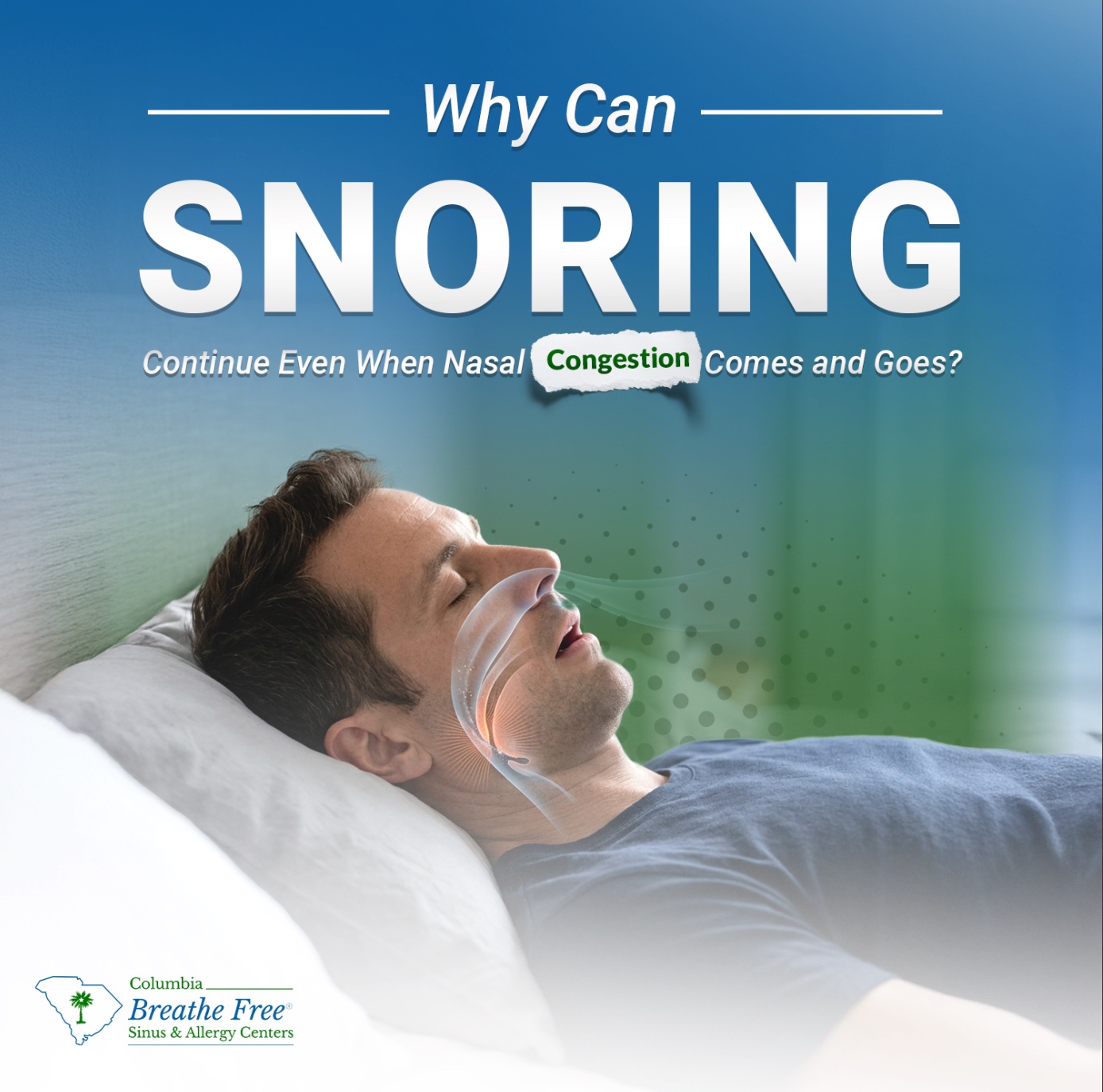
Why Can Snoring Continue Even When Nasal Congestion Comes and Goes?
Snoring can continue even when nasal congestion comes and goes because the cause may involve more than the nasal passages. Relaxed throat tissues, tongue position, a deviated septum, allergies, sleeping position, and obstructive sleep apnea can all contribute to persistent snoring. Learn why congestion may worsen snoring, which symptoms may indicate a sleep-related breathing disorder, how an ENT evaluates possible causes, and what treatment options may help at Columbia Breathe Free Sinus & Allergy Centers in South Carolina.

Nasal Polyps vs. Swollen Nasal Tissue: Why Can They Feel Similar?
Both soft nasal polyps and enlarged turbinates can block airflow, reduce your sense of smell, and affect sinus drainage; an evaluation at Columbia Breathe Free in Lexington, SC, can help determine what may be contributing to your symptoms and guide appropriate treatment options.
The information provided in this article is for informational and educational purposes only and does not constitute medical advice. It is not intended to diagnose, treat, cure, or prevent any disease or medical condition. Always seek the guidance of your physician or other qualified healthcare provider with any questions you may have regarding a medical condition or treatment.
Results may vary: Treatment outcomes and health experiences may differ based on individual medical history, condition severity, and response to care.
Emergency Notice: If you are experiencing a medical emergency, call 911 or seek immediate medical attention.