


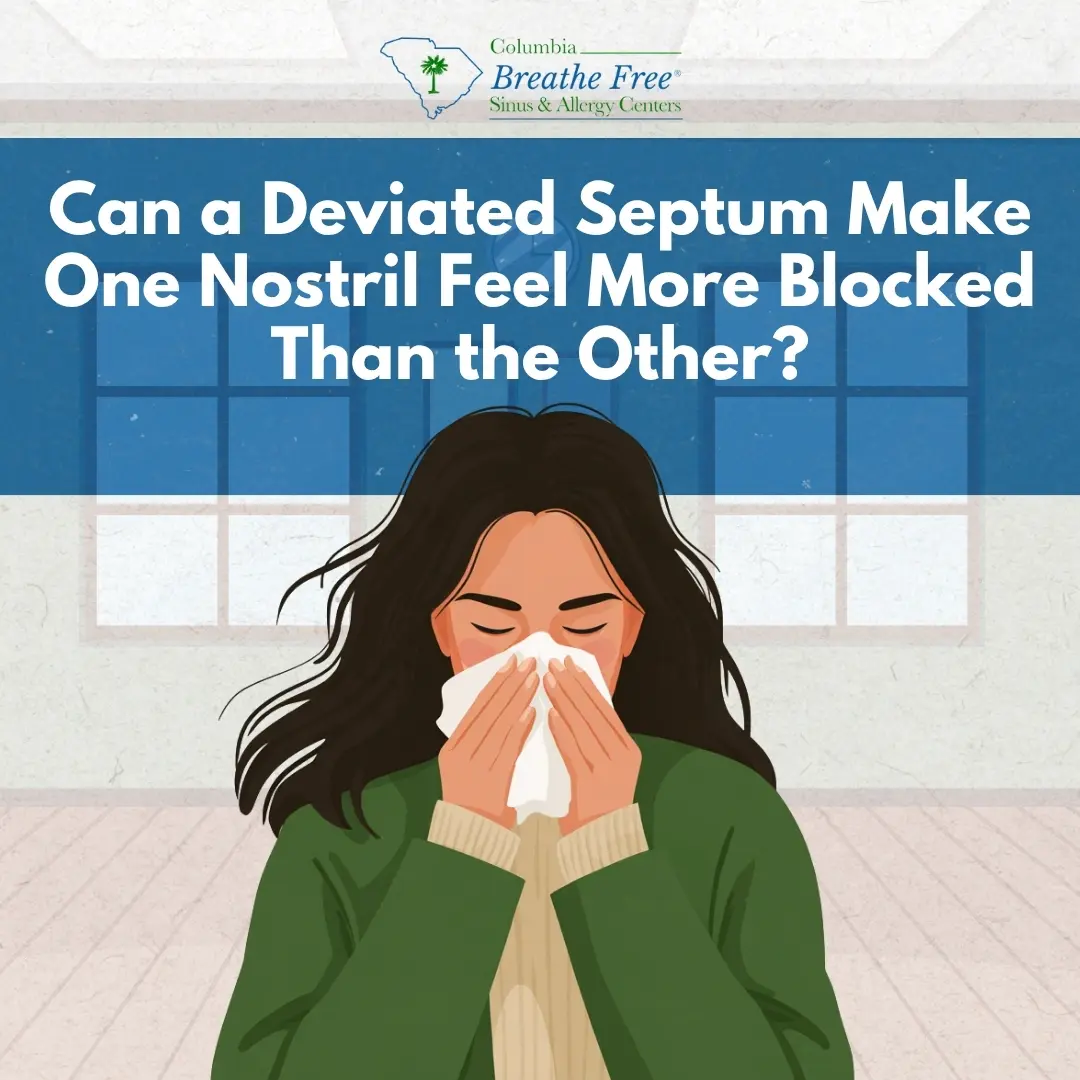
Can a Deviated Septum Make One Nostril Feel More Blocked Than the Other?
You may know it all too well: that feeling of congestion that sticks to only one side of your nose. It can be frustrating, especially when it feels like the stuffiness will soon go away, but it doesn’t.
Many individuals experience congestion on only one side of the nose, which can occur for a variety of reasons. A consultation with your healthcare provider can help assess your symptoms and nasal anatomy to determine whether a deviated septum may be a contributing factor.
Here at Columbia Breathe Free, we help patients in Lexington, SC, understand what might be causing nasal obstruction, determine whether a deviated septum may be contributing, and learn more about potential treatment options.
What Is a Deviated Septum?
A deviated septum is an anatomical variation or anomaly in which the nasal septum, the thin wall of bone and cartilage that separates the nasal cavity into left and right nostrils, is off-center and misaligned.
A deviated septum may be present at birth, result from an injury or trauma to the nose, or come with natural changes to the nose due to aging.
Most people have a nasal septum that’s a little off-center, but not everyone will notice it or experience symptoms. Many people don’t even realize they have it.
However, a more pronounced deviation can interfere with airflow and make it more difficult to breathe through the nose. In some patients, a more pronounced septal deviation may contribute to nasal obstruction or affect sinus drainage.
What Are the Common Symptoms of a Deviated Septum?
Symptoms of a deviated septum vary from one patient to another, but common symptoms may include:
- A nose that looks off-center or nostrils that look uneven or different in size
- Difficulty breathing through the nose, which is usually worse on one side
- Nasal congestion
- Facial pain or pressure
- Headaches
- Nosebleeds
- Loss or reduced sense of smell
- Noisy breathing
- Snoring
What Causes a Deviated Septum?
Several factors can contribute to the development of a deviated septum:
- Some individuals may be born with a deviated septum due to a complicated delivery that may lead to trauma to the nasal septum. As the child grows, that thin wall of bone and cartilage may lean more toward one side of the nose.
- Some people may develop a deviated septum due to a previous injury or trauma to the nose, such as a broken nose resulting from accidents or sports.
- Some individuals with a minor deviation may notice more noticeable symptoms in old age as nasal cartilage changes and structures shift over time.
Does a Deviated Septum Make One Nostril Feel More Blocked Than the Other?
Yes, a deviated septum can make one nostril feel more blocked and congested than the other because the septum may shift toward one side, making one nasal passage narrower than the other. This can make one nasal passage smaller than the other, causing more blockage on one side.
When less air moves through one passage, that specific nostril can feel more congested and blocked. Moreover, other sinus issues, such as colds, infections, or allergies, can increase inflammation. This may further narrow the passage and make the blockage feel more pronounced.
What Are the Treatment Options for a Deviated Septum?
Mild cases of a deviated septum that cause little to no symptoms won’t typically need treatment. However, a severe deviation that causes more pronounced symptoms may need different courses of treatment, depending on the severity and other contributing factors. These treatments may include:
- Medications, such as decongestants, saline nasal sprays, and antihistamines, may help address some mild symptoms.
- Septoplasty: For appropriately selected patients whose symptoms are associated with a deviated septum and do not improve with conservative management, an ENT may recommend septoplasty to straighten or reposition the nasal septum.
When One-Sided Blockage Is Not All Due to a Deviated Septum
A deviated septum isn’t the only cause of persistent one-sided blockage. Other factors may contribute to or worsen this sense of nasal blockage:
- Nasal cycle: The nasal cycle is the natural alternating pattern of airflow and tissue swelling between the two sides of the nose. It’s a natural and subtle phenomenon, which causes one nasal passage to become slightly narrower while the other becomes more open. This can cause deviated septum symptoms to become more pronounced as the already narrower passage becomes even more blocked during the switch.
- Nasal polyps: Nasal polyps are soft, painless, noncancerous growths that can form in the nasal and sinus linings. These growths can narrow the nasal passages and may worsen obstruction in someone who also has a deviated septum.
- Allergies and sinusitis: Allergies and sinusitis can increase nasal swelling, which can make an already narrowed nasal passage even narrower.
- Enlarged turbinates: Turbinate hypertrophy is a condition in which the turbinates grow excessively or are enlarged. This can block airflow and, depending on which side of the nose is affected and the deviation of the nasal wall, can worsen nasal obstruction and breathing difficulty.
- Nasal valve collapse: A nasal valve collapse occurs when the nasal valve narrows and collapses inward, which may make breathing difficulties and nasal blockage more obvious.
When Is It Time to Seek Professional Medical Help?
Consider seeing a medical professional if you are experiencing any of the following symptoms:
- Breathing difficulties through the nose that significantly impact daily activities, concentration, sleep, and comfort
- Frequent or recurring sinus infections
- Poor sleep quality or difficulty sleeping due to breathing difficulties
- Frequent nosebleeds
- Intense headaches or severe sinus pressure
An ENT consultation can help assess your symptoms, evaluate your nasal and sinus anatomy, and determine whether a deviated septum may be contributing to your symptoms.
Conclusion: Understanding Deviated Septum-Related Congestion With Columbia Breathe Free
Columbia Breathe Free provides ear, nose, and throat care services in Columbia, Lexington, Irmo, West Columbia, and the surrounding Midlands communities. If you are experiencing persistent one-sided congestion and would like to find out more about why this happens, get in touch with our team to learn more about how we can help.
Other Blogs
Understanding Chronic Sinusitis: Symptoms, Causes, and Treatment Options
Chronic sinusitis can cause persistent nasal congestion, sinus pressure, postnasal drip, headaches, and other symptoms that may interfere with daily life. This guide explains what chronic sinusitis is, common causes and symptoms, how Lexington’s environment may affect sinus health, and available treatment options, including medications, allergy drops, balloon sinuplasty, septoplasty, and endoscopic sinus surgery. Learn when persistent or recurring symptoms may warrant an evaluation with a sinus specialist at Columbia Breathe Free.
Allergy Season in Columbia: What ENT Specialists Want You to Know
Columbia ranks among the nation's top allergy capitals. ENT specialists at Columbia Breathe Free break down seasonal triggers, symptoms, and treatment options to help you find relief.
%20(1).png)
How Modern ENT Clinics Use Technology to Improve Sinus Treatment
Common sinus issues such as nasal congestion, postnasal drip, and sinus pressure can be frustrating; therefore, understanding how modern ENT technologies are used at Columbia Breathe Free can help patients in Lexington, SC, find effective, minimally invasive sinus treatment and long-term relief.
The information provided in this article is for informational and educational purposes only and does not constitute medical advice. It is not intended to diagnose, treat, cure, or prevent any disease or medical condition. Always seek the guidance of your physician or other qualified healthcare provider with any questions you may have regarding a medical condition or treatment.
Results may vary: Treatment outcomes and health experiences may differ based on individual medical history, condition severity, and response to care.
Emergency Notice: If you are experiencing a medical emergency, call 911 or seek immediate medical attention.