


.webp)
Ringing in the Ears: When to See an ENT
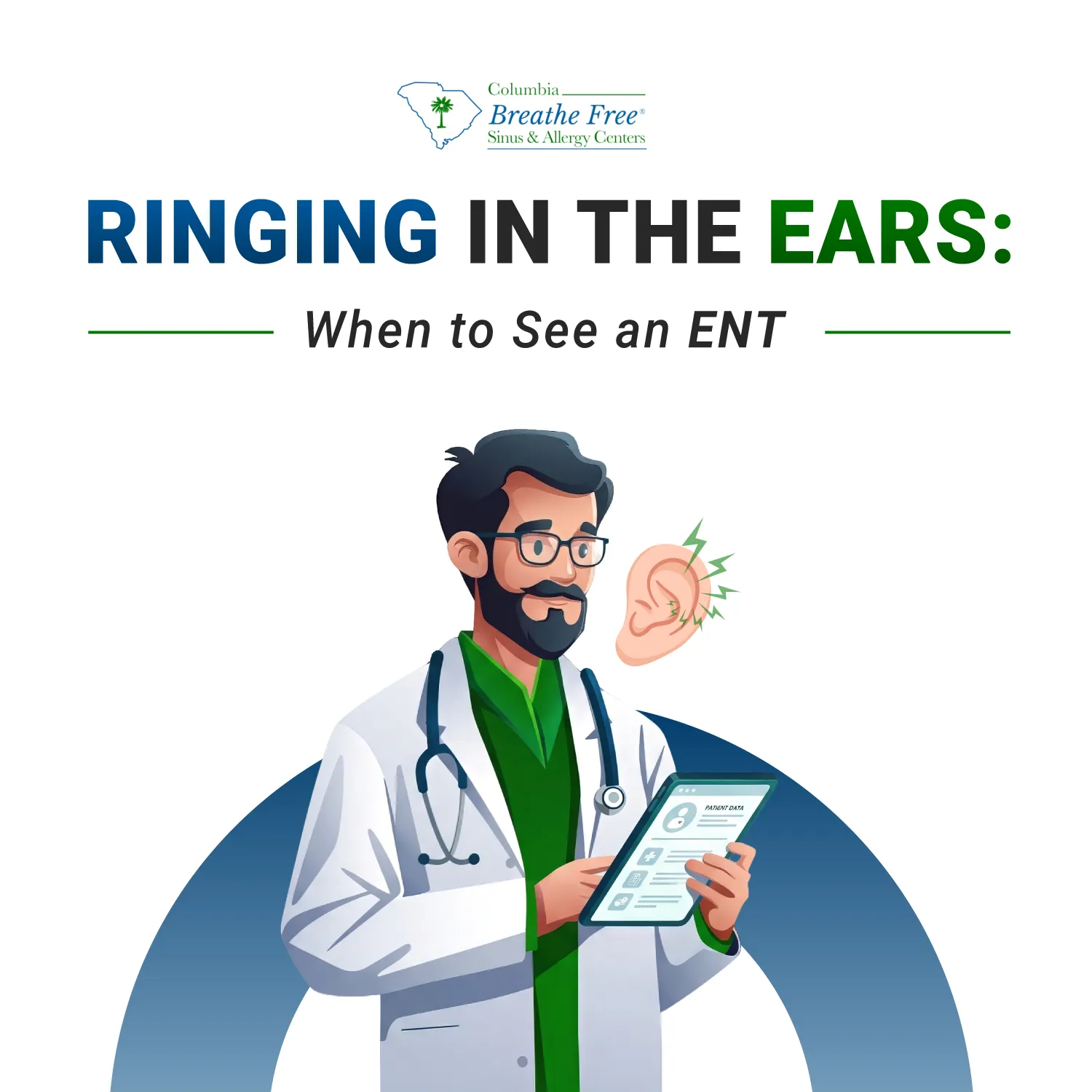
Ringing in the ears can be distracting, frustrating, and sometimes hard to ignore. For some people, it is a faint sound that shows up only in quiet moments. For others, it is more constant and starts to interfere with sleep, concentration, or everyday comfort. This symptom is called tinnitus, and it is common. About 10% of adults in the United States report tinnitus that lasted at least five minutes within the past year.
Tinnitus is not a condition by itself. It is a symptom that can be linked to hearing loss, loud-noise exposure, earwax buildup, certain medications, ear disorders, and sometimes blood-flow changes. At Columbia Breathe Free Sinus & Allergy Centers, we evaluate a range of ear, nose, and throat concerns, including ear symptoms and hearing-related issues that may need a closer look.
What Tinnitus Can Sound Like
Even though many people describe tinnitus as ringing, it does not always sound that way. Patients may describe it as:
- ringing
- buzzing
- humming
- hissing
- clicking
- roaring
- whooshing
It may affect one ear or both. It may come and go, or it may be present much of the time. Some people notice it most at bedtime when the room is quiet. Others find that it becomes harder to ignore during the day.
When It May Not Be Urgent
A short episode of ringing after a loud concert, sporting event, or another noisy setting may settle down on its own. Loud-noise exposure can affect hearing over time, and hearing loss is one of the more common factors associated with tinnitus. If the sound fades and does not return, it may not require urgent attention.
Still, recurring or lingering tinnitus deserves more attention. If the sound keeps coming back, becomes more noticeable, or starts affecting your routine, it makes sense to have it evaluated rather than assuming it will always pass on its own.
Signs It May Be Time to See an ENT
One of the clearest reasons to see an ENT is persistence. If ringing in the ears lasts more than a week, keeps recurring, or starts affecting sleep, focus, or your day-to-day routine, it may be time to schedule an evaluation.
It is also a good idea to seek care if tinnitus comes with:
- hearing loss or muffled hearing
- dizziness or vertigo
- ear fullness or pressure
- ear pain or drainage
- tinnitus in only one ear
- sudden or quickly worsening symptoms
These details matter because they can point to an underlying ear or hearing problem that may need more than reassurance alone.
A Heartbeat-Like Sound Should Not Be Ignored
Not all tinnitus sounds the same. If the sound seems to match your pulse or heartbeat, that is often called pulsatile tinnitus. This type may warrant prompt medical evaluation because it can sometimes be associated with vascular causes or other medical issues involving blood flow. It does not automatically mean something severe is happening, but it is not the kind of symptom to leave unexplained.
Sudden Hearing Changes Need Faster Attention
If tinnitus begins along with sudden hearing loss, that is more urgent. Sudden hearing loss generally warrants prompt medical evaluation, and hearing testing is recommended within a few days when this is suspected. Prompt ENT care matters because sudden hearing loss can sometimes be mistaken for congestion, allergies, or earwax when it needs faster medical attention.
The same applies if ringing starts with severe dizziness, marked imbalance, or a sudden difference between one ear and the other. One-sided tinnitus with sudden hearing change is not something to put off.
What an ENT Evaluation May Include
An ENT visit for tinnitus usually starts with the symptom pattern. We may ask when the sound began, whether it is constant or intermittent, whether it affects one ear or both, whether there has been recent loud-noise exposure, and whether you have noticed hearing changes, dizziness, fullness, or other ear symptoms. A physical exam and hearing test are often part of the workup because tinnitus commonly occurs alongside hearing loss.
In some cases, the explanation may be relatively direct, such as earwax, hearing loss, or another ear-related issue. In other cases, the evaluation may point to a pattern that needs further testing or follow-up. The purpose of the visit is to assess what may be contributing to the symptom and discuss what next steps may be appropriate based on your history and exam.
Why It Helps to Pay Attention Early
Tinnitus is not always dangerous, but it can still be disruptive. Some people find it harder to sleep. Others notice that quiet settings feel more stressful or that concentration becomes more difficult. When the symptom keeps returning or starts changing your routine, it makes sense to stop guessing and have it evaluated.
At Columbia Breathe Free Sinus & Allergy Centers, we provide ENT care in Columbia, Lexington, West Columbia, and the surrounding area. Our team treats a range of sinus, allergy, ear, and hearing-related concerns, which can be helpful when symptoms do not fit neatly into one category.
Talk With Us About Ringing in the Ears
An ENT evaluation is an opportunity to ask questions, learn about possible causes of ringing in the ears, and discuss appropriate next steps based on your symptoms. If you have been noticing persistent or recurring tinnitus, we can help you take the next step toward understanding your symptoms and exploring your care options.
Other Blogs
.webp)
Nasal Polyps vs. Swollen Nasal Tissue: Why Can They Feel Similar?
Both soft nasal polyps and enlarged turbinates can block airflow, reduce your sense of smell, and affect sinus drainage; an evaluation at Columbia Breathe Free in Lexington, SC, can help determine what may be contributing to your symptoms and guide appropriate treatment options.
Can a Deviated Septum Make One Nostril Feel More Blocked Than the Other?
Wondering why one nostril always feels more blocked? Learn how a deviated septum affects airflow, what else may cause one-sided congestion, and when to see an ENT in Columbia.
Understanding Chronic Sinusitis: Symptoms, Causes, and Treatment Options
Chronic sinusitis can cause persistent nasal congestion, sinus pressure, postnasal drip, headaches, and other symptoms that may interfere with daily life. This guide explains what chronic sinusitis is, common causes and symptoms, how Lexington’s environment may affect sinus health, and available treatment options, including medications, allergy drops, balloon sinuplasty, septoplasty, and endoscopic sinus surgery. Learn when persistent or recurring symptoms may warrant an evaluation with a sinus specialist at Columbia Breathe Free.
The information provided in this article is for informational and educational purposes only and does not constitute medical advice. It is not intended to diagnose, treat, cure, or prevent any disease or medical condition. Always seek the guidance of your physician or other qualified healthcare provider with any questions you may have regarding a medical condition or treatment.
Results may vary: Treatment outcomes and health experiences may differ based on individual medical history, condition severity, and response to care.
Emergency Notice: If you are experiencing a medical emergency, call 911 or seek immediate medical attention.