


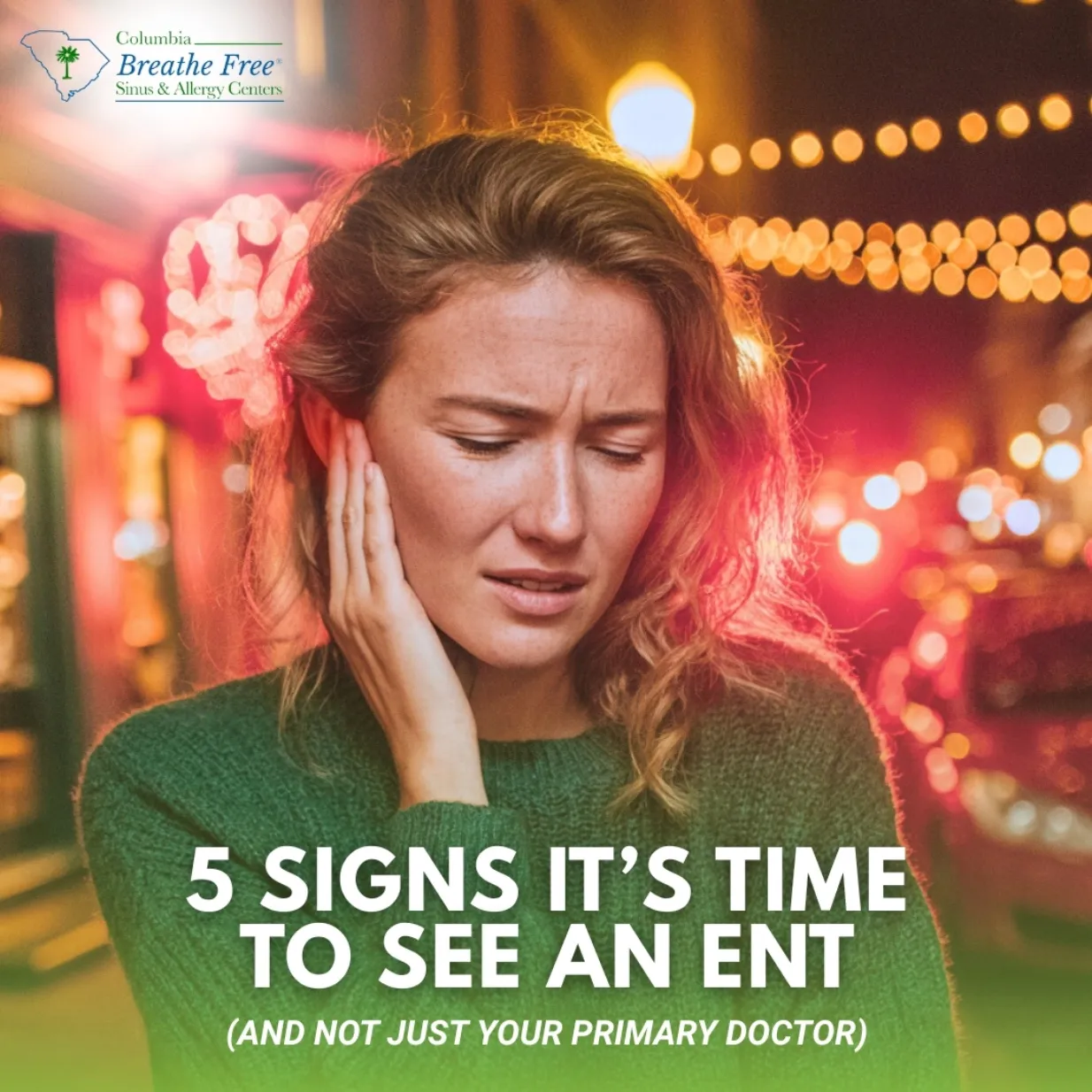
5 Signs It’s Time to See an ENT (and Not Just Your Primary Doctor)
If you’ve ever dealt with persistent ENT issues like chronic nasal congestion, recurring ear infections, severe sinus pain and pressure, and hearing difficulties, then you know how they may affect your daily life, productivity, and comfort, depending on their severity.
Many patients today are taking a more proactive approach to their health and may choose to seek care when they notice persistent or worsening symptoms.
This guide, developed by Columbia Breathe Free, aims to help patients recognize the signs that tell them it’s time to see an ENT specialist in Lexington, SC.

5 Signs It’s Time to See an ENT in Lexington, SC
Here are five signs that may indicate that you should see an ENT doctor in Lexington:
- Chronic ENT issues
While a primary care provider (PCP) is equipped and trained to address mild and acute ENT concerns, severe, chronic, recurring, or persistent issues may require the attention of an ENT specialist. A consultation with your primary doctor can help determine if a referral to a specialist is appropriate.
✔️Chronic sinusitis
Sinusitis is a condition in which the tissues lining the sinuses (the hollow, air-filled spaces located behind the nose, cheeks, and forehead) become irritated, swollen, and inflamed. The irritation may result from a variety of factors, such as allergies, bacterial infections, or viral infections.
Another common cause of chronic or frequent sinus infections is the presence of nasal polyps, which are an excess tissue growth along the lining of the sinuses. This excess tissue can cause a blockage, preventing drainage and creating an ideal environment for germs and viruses.
✔️Severe sinus pain or pressure
Sinus pain and pressure, especially around the eyes, nose, cheeks, and forehead, are often associated with sinus issues. Typically, they go away after the sinus issue clears up. However, if the sinus pain and pressure don’t go away, your primary doctor may refer you to a specialist for further testing and evaluation.
✔️Recurring ear infections
Ear infections are more common in young children aged six months to two years old, as the size and shape of their middle ear and eustachian tubes make them more susceptible.
If left untreated in children, recurring ear infections may sometimes lead to hearing, speech, or balance issues.
Although more common in children, adults can still sometimes develop ear infections. In rare cases, chronic ear infections in adults may be associated with a more serious underlying condition, which may require the expertise of a specialist for diagnosis and evaluation.
✔️Frequent nosebleeds
While nosebleeds are common and often a short-term problem, especially in dry and cold seasons, frequent nosebleeds can indicate a more serious underlying condition, such as a bleeding disorder.
A consultation with an ENT specialist may help explore potential underlying causes and inform the next appropriate steps in evaluation and management.
✔️Persistent sore or scratchy throat
A sore and scratchy throat–especially when accompanied by coughing and voice hoarseness–that doesn’t go away with time and rest, can signal a more serious underlying throat condition. Your primary doctor may refer you to a specialist who is equipped to perform examinations of your throat and vocal cords to identify the issue.
- Hearing loss or tinnitus
Imagine having to turn up the volume of your TV or phone more than usual or asking people to repeat themselves because you didn’t hear them the first time. If you’re experiencing these symptoms, a medical provider can evaluate whether there have been changes in your hearing. An ear infection, earwax buildup, or a ruptured eardrum may be the root cause of your hearing issue.
Tinnitus is characterized by a constant ringing sensation in the ears without an external source. Both conditions may benefit from a consultation and evaluation by an ENT specialist.
- Dizziness or balance problems
Persistent dizziness and issues with maintaining balance can have many causes, one of which is an inner ear disorder. Some cases may be associated with benign paroxysmal positional vertigo (BPPV) or some other vestibular disorder.
Your primary doctor can help determine if your case will benefit from seeing a specialist, who can perform tests and refer you to other specialists, if needed, to help determine the root cause.
- Severe snoring or a possible case of sleep apnea
Snoring is normal and typically harmless. However, severe and excessive snoring may point to a possible case of sleep apnea.
Sleep apnea is a sleeping disorder characterized by repeated cycles of breathing pauses during sleep, due to an obstruction in the airways. This reduces oxygen in the brain. The brain sends a signal to jolt the person awake, often gasping for air. This may contribute to disrupted sleep cycles. Some research has suggested a potential link between untreated sleep apnea and an increased risk of cardiovascular conditions.
An ENT specialist can perform specialized evaluations and may work with other professionals for further diagnostic testing, such as a sleep study.
- Enlarged lymph nodes
Lymph nodes are present in the head and neck, and help the body fight off infections. Sometimes, they become swollen. Bumps and masses can also appear in the head or neck without an explanation. If the swelling lasts for more than two weeks or seems to become larger, a consultation with an ENT specialist may be the appropriate next step.
Disclaimer: Not all symptoms listed and explained above will require a consultation with a specialist. A consultation with your primary doctor can help determine whether a referral to an ENT specialist is appropriate.
Frequently Asked Questions About Lexington ENTs
What is an ENT?
An ENT, also known as an otolaryngologist, is a healthcare professional who specializes in diagnosing and treating conditions affecting the ears, nose, and throat. Some ENTs may choose to pursue further specialized training, so their subspecialty may include the more complex conditions of the head, neck, mouth, and facial structures.
Primary doctor vs ENT: What is the difference?
While a primary doctor is equipped to treat and address mild and acute ENT issues, they may recommend you to an ENT specialist if your condition is chronic, complex, or persistent. A consultation with your primary care provider can help determine if you should seek medical help from a specialist.
Choosing the Right ENT Specialist in Lexington, SC
Persistent or chronic ENT symptoms may benefit from professional medical evaluation. Columbia Breathe Free is one of several ENT care options serving the Lexington area and the surrounding communities. If you wish to learn more about our clinic and specialty, visit our website.
Other Blogs
.png)
Nasal Polyps vs. Swollen Nasal Tissue: Why Can They Feel Similar?
Both soft nasal polyps and enlarged turbinates can block airflow, reduce your sense of smell, and affect sinus drainage; an evaluation at Columbia Breathe Free in Lexington, SC, can help determine what may be contributing to your symptoms and guide appropriate treatment options.
Can a Deviated Septum Make One Nostril Feel More Blocked Than the Other?
Wondering why one nostril always feels more blocked? Learn how a deviated septum affects airflow, what else may cause one-sided congestion, and when to see an ENT in Columbia.
Understanding Chronic Sinusitis: Symptoms, Causes, and Treatment Options
Chronic sinusitis can cause persistent nasal congestion, sinus pressure, postnasal drip, headaches, and other symptoms that may interfere with daily life. This guide explains what chronic sinusitis is, common causes and symptoms, how Lexington’s environment may affect sinus health, and available treatment options, including medications, allergy drops, balloon sinuplasty, septoplasty, and endoscopic sinus surgery. Learn when persistent or recurring symptoms may warrant an evaluation with a sinus specialist at Columbia Breathe Free.
The information provided in this article is for informational and educational purposes only and does not constitute medical advice. It is not intended to diagnose, treat, cure, or prevent any disease or medical condition. Always seek the guidance of your physician or other qualified healthcare provider with any questions you may have regarding a medical condition or treatment.
Results may vary: Treatment outcomes and health experiences may differ based on individual medical history, condition severity, and response to care.
Emergency Notice: If you are experiencing a medical emergency, call 911 or seek immediate medical attention.