


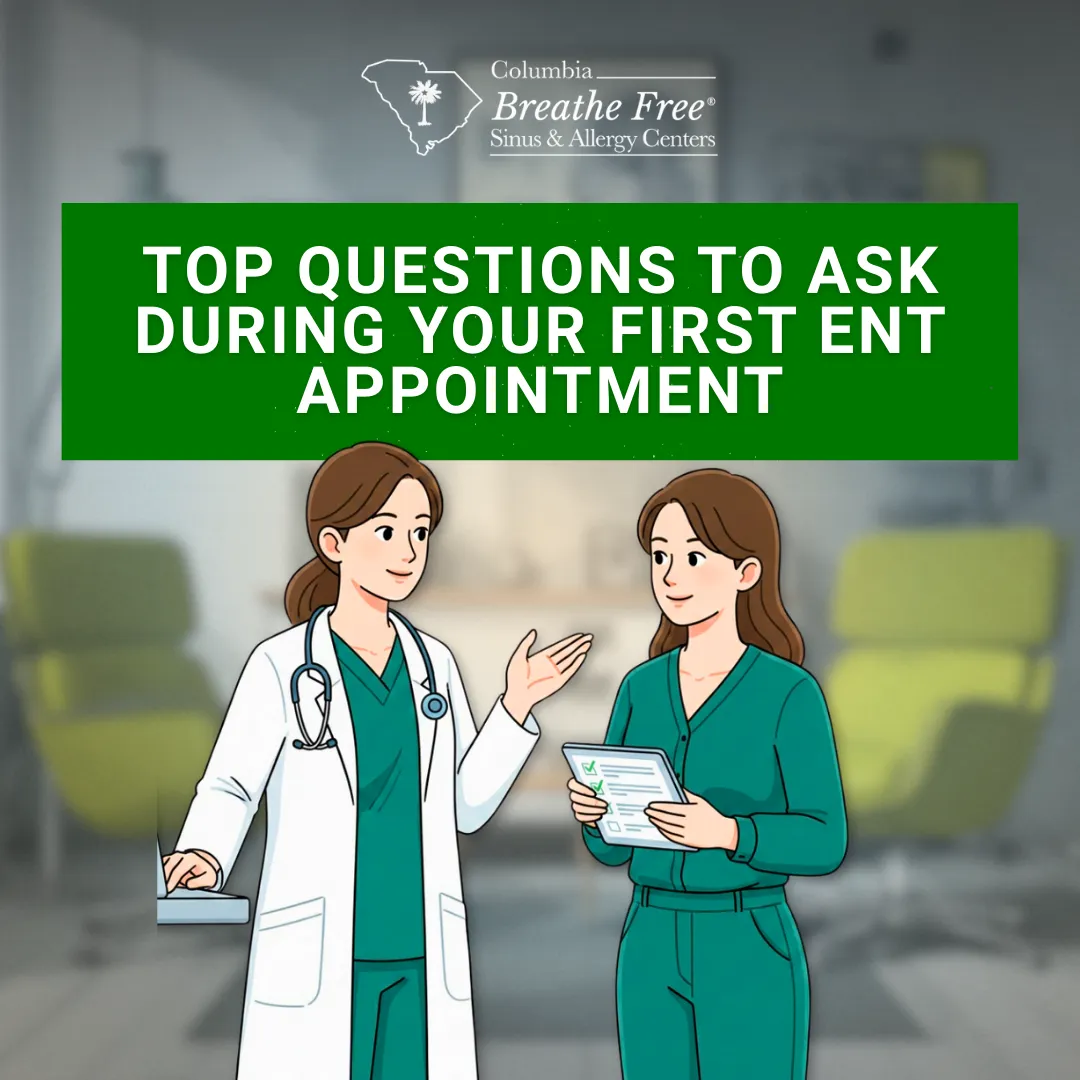
Top Questions to Ask During Your First ENT Appointment
ENT care providers are specialists who are specially trained to manage persistent or more complex conditions affecting the ears, nose, and throat, particularly when primary care management is no longer effective.
A visit to an ENT specialist can be overwhelming and confusing, especially if it is your first visit to one. You’d want your ENT visit to be as informative as possible and hopefully, to help put your mind at ease.
This content is provided by Columbia Breathe Free as an informational resource for patients in Columbia, SC, to help them navigate their first ENT appointment as smoothly as possible.
Questions You Should Ask During Your First ENT Appointment
So you scheduled an appointment with your primary care provider (PCP) for some ENT concerns that have been bothering you for some days now. If they referred you to an ENT specialist, you may have a number of questions you want answered. Preparing these questions ahead of your appointment with a specialist allows you to make the most out of your concerns
Consider these questions during your first ENT consultation:
- Does my condition require the care of an ENT specialist?
Your primary care provider or general practitioner should be able to diagnose and address mild ENT issues and concerns. However, if your symptoms persist or worsen, you may be referred to a specialist for diagnosis and treatment.
Upon your scheduled appointment, go ahead and confirm whether your condition requires the special training and expertise of ENT doctors, also known as otolaryngologists.
- What possible diagnosis could explain my symptoms?
When visiting an ENT specialist, you need to know the diagnosis that could explain your symptoms. Your ENT care provider will conduct tests as needed, as well as ask about your symptoms and their severity, to help determine what might be causing your troubles.
In ENT, issues can be classified into three main groups:
- Ear issues: Ear infections, hearing loss, tinnitus, eustachian tube dysfunction, etc.
- Nose issues: Allergies, nasal congestion, chronic sinusitis, nasal polyps, deviated septum, etc.
- Throat issues: Tonsillitis, wheezing, hoarseness, painful swallowing, chronic cough, etc.
Ask your doctor about possible tests that may give you a proper diagnosis. If you’re having trouble understanding technical words, ask them to explain everything in simple terms. You need to leave your doctor’s office enlightened about your condition.
- Can you treat my problem?
Otolaryngologists are trained and well-equipped to treat a wide variety of conditions affecting the ears, nose, and throat. Some ENT doctors undergo additional accredited fellowship training and board certification to treat more complex conditions involving the head, neck, or facial structures.
During your first appointment, ask whether they commonly evaluate or treat conditions like yours. In some cases, your ENT may determine that your needs would be better served by a physician with additional subspecialty training, and refer you as appropriate.
- What treatment options do I have?
In ENT care, what you need to remember is that treatment is not a one-size-fits-all approach. Diagnoses, treatment, and management are all highly personalized for each patient’s clinical findings, symptoms, medical history, and other personal health factors like lifestyle and health goals.
Take the time to sit down with your ENT doctor to develop, create, and review an individualized treatment plan according to your needs.
- How does my condition impact my overall health?
Ear, nose, and throat health plays a crucial role in day-to-day productivity and comfort. Conditions and issues that affect them can affect your overall health in one way or another.
In some cases, nasal obstruction and chronic sinus infections can cause breathing difficulties. Similarly, ear infections can sometimes cause dizziness or vertigo. A persistent sore throat may also interfere with proper eating and drinking.
Ask your ENT care provider how your condition can impact other aspects of your life and what you can do to overcome these effects.
- What can I do to improve my condition?
Other than medical care and treatment, ask your ENT care provider if there are things you can do to alleviate ENT symptoms. This may include lifestyle changes, diet, exercise, sleep, and other healthy habits that may help mitigate the severity of your symptoms.
- How much will treatment cost?
Upon your ENT appointment and consultation on potential treatment options, be sure to request an estimate before saying yes to any treatments. This helps you make informed decisions based on your care needs, insurance coverage, and treatment options..
It’s also worth asking if your ENT doctor accepts your insurance. This allows you to get quality ENT care without having to pay for everything out-of-pocket.
Disclaimer: Cost estimates vary depending on the required services and your insurance plan. Confirm coverage details with the clinic’s billing office and your insurance provider.
ENT FAQs in Columbia, SC
What happens during my first ENT appointment in Columbia, SC?
ENT appointments may vary from one patient to another, keeping in mind that the patient journey is highly tailored to each patient’s individual needs and preferences. But generally, here’s how you can expect your first ENT appointment to go:
- First, your ENT patient journey starts with a check-in at the front desk of the ENT clinic. You may be asked to answer a short questionnaire to provide a background about your symptoms, concerns, and medical history before the consultation.
- Then, the consultation begins. This may include your ENT doctor performing a physical examination of your ears, nose, throat, and neck. Tools may be used to see inside the nose, nasal passages, ear, or throat. You will also be asked questions about your symptoms and how they impact your daily life.
- If needed, your ENT care provider may perform additional tests to confirm a diagnosis.
- Lastly, during the same visit, your doctor will discuss potential treatment plans to address your ENT concerns.
How should I prepare for my first ENT appointment?
Here’s a short but helpful guide to prepare yourself for your first consultation with an ENT specialist in Columbia, SC:
- Gather your medical history, including past medical conditions, current medications, family medical history, and any allergies.
- Be fully ready to discuss your symptoms, their severity, how long you’ve had them, and how they impact your life.
- Prepare relevant questions to ask your doctor during your first visit.
- Call in and understand insurance and billing logistics.
- Arrive early for your appointment.
- Ask about potential follow-ups and next steps after your initial consultation.
Conclusion: Be Ready for Your First Columbia, SC, ENT Appointment
This guide was developed by Columbia Breathe Free to support patient education and decisions.
Columbia Breathe Free provides ENT services in Columbia, Lexington, West Columbia, and the surrounding areas. Visit our website to learn more about our services or get in touch with our team with any questions.
Other Blogs

Can a Deviated Septum Make One Nostril Feel More Blocked Than the Other?
Wondering why one nostril always feels more blocked? Learn how a deviated septum affects airflow, what else may cause one-sided congestion, and when to see an ENT in Columbia.
Understanding Chronic Sinusitis: Symptoms, Causes, and Treatment Options
Chronic sinusitis can cause persistent nasal congestion, sinus pressure, postnasal drip, headaches, and other symptoms that may interfere with daily life. This guide explains what chronic sinusitis is, common causes and symptoms, how Lexington’s environment may affect sinus health, and available treatment options, including medications, allergy drops, balloon sinuplasty, septoplasty, and endoscopic sinus surgery. Learn when persistent or recurring symptoms may warrant an evaluation with a sinus specialist at Columbia Breathe Free.
The information provided in this article is for informational and educational purposes only and does not constitute medical advice. It is not intended to diagnose, treat, cure, or prevent any disease or medical condition. Always seek the guidance of your physician or other qualified healthcare provider with any questions you may have regarding a medical condition or treatment.
Results may vary: Treatment outcomes and health experiences may differ based on individual medical history, condition severity, and response to care.
Emergency Notice: If you are experiencing a medical emergency, call 911 or seek immediate medical attention.