


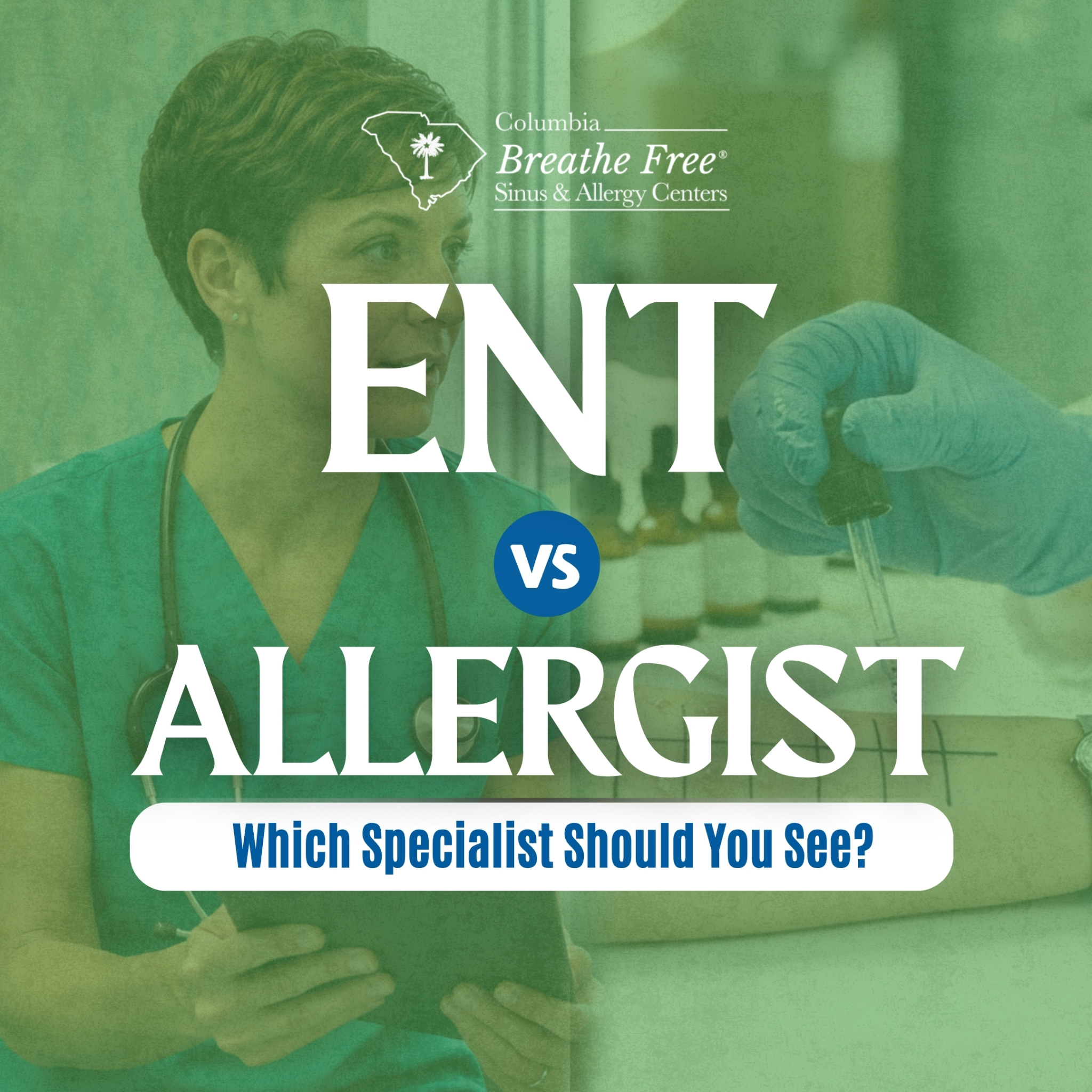
ENT vs. Allergist: Which Specialist Should You See?
Common sinus issues such as nasal congestion, postnasal drip, frequent sneezing, sinus pressure, and breathing difficulties can be frustrating. More than mere frustrations, they can start affecting your day-to-day life, productivity, sleep, and comfort.
So you keep waking up with these symptoms, and you’ve had enough. You’ve finally decided to seek professional medical help, but now you’re at a loss about where to begin your healthcare journey: do you need to see an ENT or an allergist?
Both specialists can help you understand your sinus issues and guide you through treatment. This guide from Columbia Breathe Free can help the residents of Lexington, SC, understand the difference between these two specialists and determine which one they should go see first.
What Is an ENT?
An ENT, formally known as an otolaryngologist in most medical settings, is a healthcare provider who diagnoses and treats conditions and diseases of the ears, nose, throat, neck, and related facial structures. Based on the patient’s clinical findings and individual healthcare needs, they may offer nonsurgical and surgical treatment options.
Depending on their training and clinical focus, ENTs may also be trained in performing surgeries in the head, neck, nose, ears, mouth, throat, and face for complex issues.
What Does an ENT Treat?
Depending on their training and clinical focus, ENTs may evaluate and manage a wide range of conditions, including:
- Chronic sinusitis
- Recurring ear infections
- Hearing loss
- Persistent nasal congestion
- Severe sinus or facial pressure
- Tonsillitis
- Persistent sore or scratchy throat
- Chronic cough
- Persistent runny nose
- Difficulty swallowing
- Hoarseness or wheezing
- Dizziness, vertigo, and other balance issues
- Nasal polyps, deviated septum, and other structural issues
- Lumps in the face or neck
- Severe snoring, sleep apnea, and other sleep-related breathing disorders
What Is an Allergist?
An allergist is a healthcare provider who diagnoses and addresses allergies, asthma, and other immune-related conditions.
An allergist can perform allergy testing, prescribe medications, and recommend treatment and management strategies to help manage allergies and asthma.
What Does an Allergist Treat?
An allergist can address an array of immune-related conditions and issues, such as:
- Allergic rhinitis (hay fever)
- Allergic conjunctivitis
- Asthma
- Food allergies
- Drug allergies
- Eczema
- Anaphylaxis
- Latex allergies
Should You See an ENT or Allergist in Lexington, SC?
Both specialists can help you understand and address an array of sinus issues and symptoms. Which specialist you should go see first will depend on your current symptoms and their severity and your medical history.
If your symptoms suggest an underlying structural concern, repeated sinus or ear infections, or issues with the nose, ears, throat, voice, or balance, then you may benefit from an ENT consultation.
⭕You should consider seeing an ENT specialist first if you are experiencing:
- Chronic or recurring sinus infections
- Ear infections or hearing difficulties
- Persistent nasal blockage that causes breathing difficulties
- Tonsillitis and other throat concerns
- Structural issues or anomalies in the nose and sinuses
If your current symptoms are worsening during high-pollen seasons, or do not involve red flag symptoms such as high fever, several sinus and facial pain or pressure, persistent nasal blockage, or ear problems, then an allergist consultation may be more appropriate.
⭕You should consider seeing an allergist first if you are experiencing:
- Sinus symptoms and issues triggered or worsened during certain seasons
- Frequent and uncontrollable sneezing
- Itchy eyes, nose, and throat
- Runny nose with thin, clear, and watery discharge
- Asthma linked to allergies
When Will I Need Both Specialists?
Some sinus cases may need joint specialized care from both an ENT and an allergist, especially if symptoms result from a combination of allergy and structural factors.
You may want to consider care from both an allergist and an ENT for:
- Allergy conditions that may be causing chronic swelling and inflammation in the sinuses, which may be contributing to chronic mucus buildup, nasal congestion, sinus pain and pressure, postnasal drip, and ear pain or pressure
- Repeated sinus infections due to chronic sinus inflammation, poor sinus drainage, or structural problems
- Sleep-related breathing problems that may be due to allergy symptoms and structural issues
- Children with persistent sinus issues that may need joint specialist care
FAQs About ENT and Allergy Care in Lexington, SC
What is the difference between sinusitis and allergies?
Sinusitis is characterized by inflammation and swelling of the tissues lining the sinuses. The sinuses are hollow, air-filled spaces behind the nose, cheeks, and forehead. When the sinuses become irritated and swollen, mucus can build up, causing symptoms such as nasal congestion, breathing difficulties, sinus pressure, headaches, ear pain, and toothache.
Allergies are the immune system’s response to environmental substances called allergens (e.g., pollen, dust mites, mold, and pet dander) that the body misidentifies as a threat. As a response, the body releases a chemical called histamine, which causes symptoms such as sneezing, stuffy and runny nose, itchy and watery eyes, coughing, wheezing, and skin rash or hives.
Do I need to see an ENT or an allergist?
You may need to consult with an ENT if you experience sinus issues that persist no matter the season. On the other hand, you may benefit from seeing an allergist if your sinus symptoms are triggered by specific environmental factors or worsen during certain times of the year, especially during high-pollen seasons.
Do I need to see both an ENT and an allergist for my concerns?
Some complex sinus issues that involve both allergy and structural factors may need joint specialized care from both an ENT and an allergist.
Do ENTs treat allergies?
ENTs can diagnose, treat, and address some allergy-related concerns as part of ENT care. However, allergists have specialized training and expertise in allergy testing, treatment, and management, such as immunotherapy.
If you’re noticing severe allergy symptoms that are starting to impact your daily life, productivity, sleep, and comfort, consider seeing an allergist for more focused allergy care.
When should I seek medical help?
Many sinus issues may resolve with rest, hydration, medications, and home remedies. However, consider seeking medical help if symptoms last longer than 10 days, worsen, or recur frequently.
Moreover, seek prompt medical care if you are experiencing severe symptoms, such as:
- High fever
- Facial swelling
- Confusion
- Vision changes
- Symptoms of anaphylaxis
Does my insurance cover ENT and allergist visits in Lexington, SC?
Insurance compatibility, cost coverage, and out-of-pocket costs vary depending on your insurance plan and insurance provider. Our office can confirm insurance details before your appointment.
Conclusion: Understanding the Difference Between ENT and Allergy Care and Which One You Need
Our team at Columbia Breathe Free offers sinus evaluations and, when appropriate, allergy testing or referrals for allergy evaluation. If you are experiencing sinus issues that have started to impact your daily life, get in touch with our team for evaluation and treatment options based on your individual needs.
Other Blogs
Understanding Chronic Sinusitis: Symptoms, Causes, and Treatment Options
Chronic sinusitis can cause persistent nasal congestion, sinus pressure, postnasal drip, headaches, and other symptoms that may interfere with daily life. This guide explains what chronic sinusitis is, common causes and symptoms, how Lexington’s environment may affect sinus health, and available treatment options, including medications, allergy drops, balloon sinuplasty, septoplasty, and endoscopic sinus surgery. Learn when persistent or recurring symptoms may warrant an evaluation with a sinus specialist at Columbia Breathe Free.
Allergy Season in Columbia: What ENT Specialists Want You to Know
Columbia ranks among the nation's top allergy capitals. ENT specialists at Columbia Breathe Free break down seasonal triggers, symptoms, and treatment options to help you find relief.
%20(1).png)
How Modern ENT Clinics Use Technology to Improve Sinus Treatment
Common sinus issues such as nasal congestion, postnasal drip, and sinus pressure can be frustrating; therefore, understanding how modern ENT technologies are used at Columbia Breathe Free can help patients in Lexington, SC, find effective, minimally invasive sinus treatment and long-term relief.
The information provided in this article is for informational and educational purposes only and does not constitute medical advice. It is not intended to diagnose, treat, cure, or prevent any disease or medical condition. Always seek the guidance of your physician or other qualified healthcare provider with any questions you may have regarding a medical condition or treatment.
Results may vary: Treatment outcomes and health experiences may differ based on individual medical history, condition severity, and response to care.
Emergency Notice: If you are experiencing a medical emergency, call 911 or seek immediate medical attention.