


.webp)
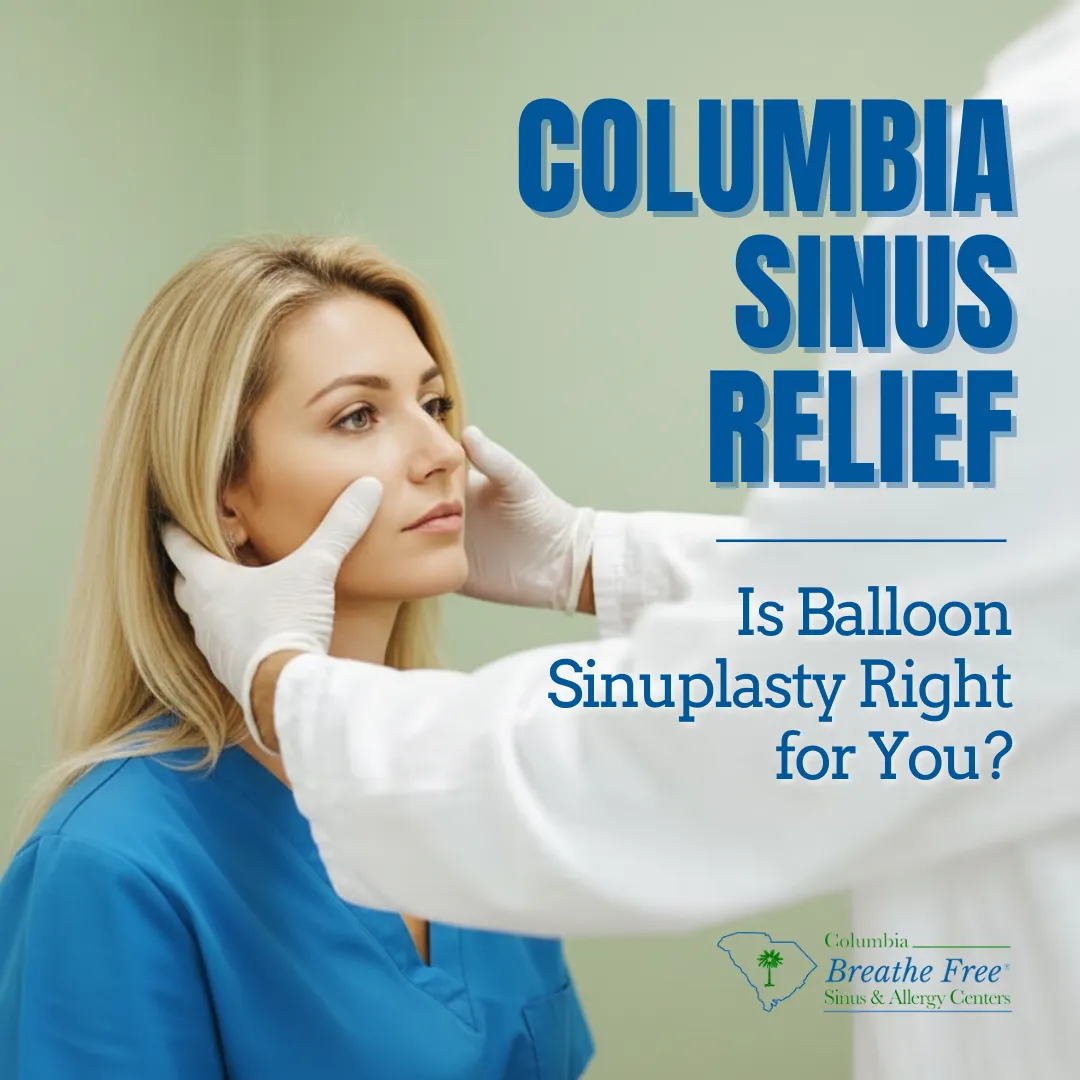
Columbia Sinus Relief: Is Balloon Sinuplasty Right for You?
Chronic sinus symptoms—such as nasal congestion, postnasal drip, facial pressure, or recurring sinus infections—can interfere with your daily life, especially if they persist despite the use of medications or home remedies.
If you're in Columbia, SC, and looking for long-term symptom relief, it may be time to talk with an ENT specialist about whether balloon sinuplasty could be an appropriate treatment option.
Understanding Balloon Sinus Dilation
Balloon sinuplasty (also known as balloon sinus dilation) is a minimally invasive procedure designed to improve sinus drainage in people with chronic or recurrent sinus problems.
It’s typically performed in an ENT office under local anesthesia and doesn’t involve incisions or removal of tissue. Most patients return home the same day.
During the procedure, a small balloon catheter is gently inserted into the blocked sinus passage and then inflated to widen the opening. This can help restore normal drainage and potentially reduce sinus-related symptoms.
Potential Benefits of Balloon Sinuplasty
Balloon sinuplasty may be considered for patients who haven’t responded to traditional medical management. Reported benefits include:
- No cutting or tissue removal, unlike traditional sinus surgery
- Outpatient procedure with most patients resuming daily activities within 24–48 hours
- Typically well tolerated, with mild side effects that often resolve within a few days
- Some patients experience significant symptom relief, including improved breathing and reduced facial pressure
In clinical studies, many patients reported long-term improvements in sinus symptoms. However, individual outcomes vary, and not everyone is a candidate for this procedure.
Are You a Candidate?
You may be considered for balloon sinuplasty if:
- You experience persistent sinus symptoms that don’t improve with medication or home care
- You have frequent sinus infections (three or more per year)
- You do not have nasal polyps or other complex sinus conditions requiring more extensive surgery
Only a qualified ENT specialist can determine if balloon sinuplasty is right for you after a full evaluation.
What to Expect After the Procedure
While recovery is typically quick, your ENT will provide post-procedure instructions tailored to your needs. These may include:
- Rest for 24–48 hours after the procedure
- Avoid blowing your nose for several days
- Refrain from strenuous activity for about a week
- Use saline sprays to keep nasal passages clear
- Keep your head elevated to minimize swelling
Some patients experience mild swelling, drainage, or temporary discomfort, which usually resolves without complications.
Columbia Breathe Free: Evaluating Treatment Options with You
At Columbia Breathe Free, we help patients explore lasting options for sinus relief, including balloon sinuplasty. Our team provides thorough evaluations and walks each patient through available treatment paths based on individual needs and clinical findings.
If you're ready to explore your options for sinus relief, schedule a consultation today. We'll help you determine whether balloon sinuplasty—or another treatment—may be the right fit for you.
Other Blogs
.webp)
Nasal Polyps vs. Swollen Nasal Tissue: Why Can They Feel Similar?
Both soft nasal polyps and enlarged turbinates can block airflow, reduce your sense of smell, and affect sinus drainage; an evaluation at Columbia Breathe Free in Lexington, SC, can help determine what may be contributing to your symptoms and guide appropriate treatment options.
Can a Deviated Septum Make One Nostril Feel More Blocked Than the Other?
Wondering why one nostril always feels more blocked? Learn how a deviated septum affects airflow, what else may cause one-sided congestion, and when to see an ENT in Columbia.
Understanding Chronic Sinusitis: Symptoms, Causes, and Treatment Options
Chronic sinusitis can cause persistent nasal congestion, sinus pressure, postnasal drip, headaches, and other symptoms that may interfere with daily life. This guide explains what chronic sinusitis is, common causes and symptoms, how Lexington’s environment may affect sinus health, and available treatment options, including medications, allergy drops, balloon sinuplasty, septoplasty, and endoscopic sinus surgery. Learn when persistent or recurring symptoms may warrant an evaluation with a sinus specialist at Columbia Breathe Free.
The information provided in this article is for informational and educational purposes only and does not constitute medical advice. It is not intended to diagnose, treat, cure, or prevent any disease or medical condition. Always seek the guidance of your physician or other qualified healthcare provider with any questions you may have regarding a medical condition or treatment.
Results may vary: Treatment outcomes and health experiences may differ based on individual medical history, condition severity, and response to care.
Emergency Notice: If you are experiencing a medical emergency, call 911 or seek immediate medical attention.