


.webp)
The Importance of Allergy Testing: Know Your Triggers in Columbia, SC
If you live in Columbia, South Carolina, and struggle with sneezing, itchy eyes, nasal congestion, or a runny nose, you’re not alone. Our warm, humid climate and high pollen counts make allergy symptoms a year-round problem for many local residents.
But guessing what's causing your symptoms isn’t always helpful—and often leads to unnecessary medications and frustration. That’s where allergy testing comes in.
At Columbia Breathe Free Sinus & Allergy Centers, we help identify your specific triggers and create a personalized treatment plan designed to help you manage your symptoms more effectively.
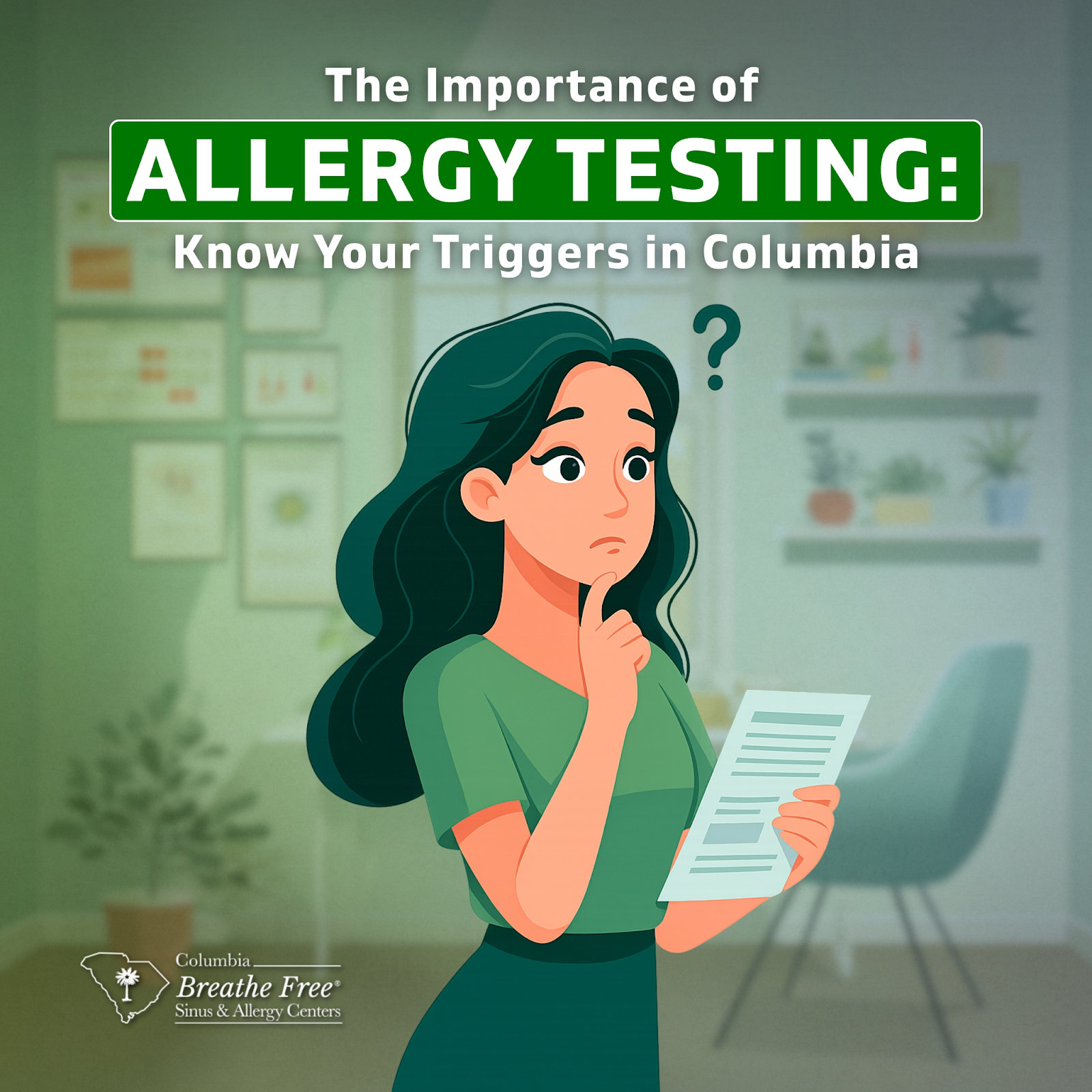
🧪 Why Allergy Testing Matters
You might assume pollen, pets, or dust are to blame for your symptoms—but allergy reactions can be deceptive. People may react to multiple allergens without realizing it.
Allergy testing helps you:
- Identify potential allergy triggers
- Make informed decisions about medication use
- Better understand what may be contributing to your symptoms
- Explore appropriate options for managing your allergies
Knowing your allergy triggers can help your provider recommend care based on your specific sensitivities and symptoms.
🌸 Common Allergy Triggers in Columbia, SC
Our local environment is rich with airborne and environmental allergens, especially in spring and fall. The most common triggers in the Columbia area include:
- Tree, grass, and weed pollen
- Mold spores, especially in damp indoor areas
- Dust mites found in bedding and furniture
- Pet dander (even from hypoallergenic breeds)
- Certain foods or insect stings
That’s why allergy testing in Columbia is so important—what bothers one person may not affect another at all.
🧬 How Allergy Testing Works at Columbia Breathe Free
We offer two primary types of allergy testing, performed right in our local office:
✅ Skin Testing
Small amounts of allergens are applied to the surface of your skin (usually your arm or back). If a raised bump or redness appears, that indicates a positive reaction.
✅ Blood Testing
For some patients, a simple blood test may be better. This test measures IgE antibodies to determine what your immune system is reacting to.
Your provider will recommend the best option based on your symptoms and health history.
🎯 What Happens After Your Test?
Once we understand your allergy profile, we’ll build a custom treatment plan that fits your lifestyle and goals. Your plan may include:
- Avoiding known triggers where possible
- Daily antihistamines or nasal sprays
- Immunotherapy (allergy drops or allergy shots) to desensitize your body over time
Our goal is to help you reduce and better manage your allergy symptoms.
🕒 When Should You Consider Allergy Testing?
It might be time to get tested if:
- You experience symptoms most days of the week
- Your allergies worsen during certain seasons
- You’ve had reactions to food, pets, or insect stings
- You're using allergy medications with little or no relief
- Allergies are interfering with sleep, work, or school performance
Allergy testing gives you the clarity and control you need to move forward with confidence.
📍 Personalized Allergy Care in Columbia, SC
At Columbia Breathe Free, we offer allergy testing tailored to your needs. Our team of ENT and allergy specialists helps patients throughout Columbia identify potential allergy triggers and explore treatment options to help manage symptoms such as congestion, sneezing, or fatigue.
Stop guessing. Start breathing easier.
📞 Call today or schedule your allergy test online and take the first step toward personalized allergy care—right here in Columbia, South Carolina.
Other Blogs
.webp)
Nasal Polyps vs. Swollen Nasal Tissue: Why Can They Feel Similar?
Both soft nasal polyps and enlarged turbinates can block airflow, reduce your sense of smell, and affect sinus drainage; an evaluation at Columbia Breathe Free in Lexington, SC, can help determine what may be contributing to your symptoms and guide appropriate treatment options.
Can a Deviated Septum Make One Nostril Feel More Blocked Than the Other?
Wondering why one nostril always feels more blocked? Learn how a deviated septum affects airflow, what else may cause one-sided congestion, and when to see an ENT in Columbia.
Understanding Chronic Sinusitis: Symptoms, Causes, and Treatment Options
Chronic sinusitis can cause persistent nasal congestion, sinus pressure, postnasal drip, headaches, and other symptoms that may interfere with daily life. This guide explains what chronic sinusitis is, common causes and symptoms, how Lexington’s environment may affect sinus health, and available treatment options, including medications, allergy drops, balloon sinuplasty, septoplasty, and endoscopic sinus surgery. Learn when persistent or recurring symptoms may warrant an evaluation with a sinus specialist at Columbia Breathe Free.
The information provided in this article is for informational and educational purposes only and does not constitute medical advice. It is not intended to diagnose, treat, cure, or prevent any disease or medical condition. Always seek the guidance of your physician or other qualified healthcare provider with any questions you may have regarding a medical condition or treatment.
Results may vary: Treatment outcomes and health experiences may differ based on individual medical history, condition severity, and response to care.
Emergency Notice: If you are experiencing a medical emergency, call 911 or seek immediate medical attention.